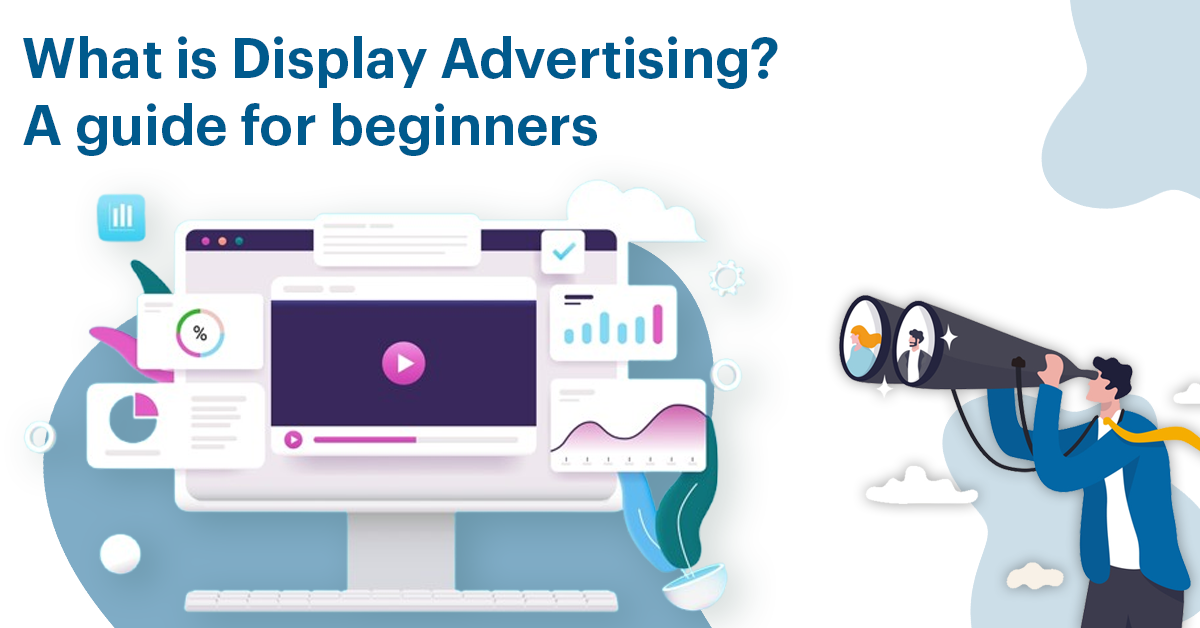
Display ads on the internet deliver visual and textual elements and calls to action that led to an online landing webpage. Display advertising is an excellent way for brands to promote their products and brands to a specific audience across various online-based platforms.
What Is a Display Ad?
Display ads are online ads that combine text and graphic elements and a call to action (CTA) message, which links to the web page. Display ads are typically seen in the upper or lower left of the website and sometimes right in the middle of the text you’re looking at. They’re visually attractive and cost-effective, allowing brands to meet their marketing objectives. This is why they are crucial in any modern mix of media.

Display advertising has transformed into an array of reach, scale, and effectiveness thanks to specific placements, various advertising formats, creativity measurement, and creativity. To make the most of your advertising on display, you need to know the factors that make it distinct from other solutions for digital advertising.
What is the Difference Between Display and Banner Ads?
Display ads are part of the category of digital ads. Many people mention “banner ads” and “display ads” when talking about online advertising. Nowadays, most people view banner ads as the same size as displays, possibly because in the beginning times of display ads, there was a common practice for an ad these ads often show up as banners at the top of websites. Today, they are often referred to as leader board ads.
What are the most common sizes for Display Ads?
The Interactive Advertising Bureau (IAB) is the authority for display advertisement sizes. Most commonly, the size for display ads is:
- Medium rectangle: 300 x 250 px
- Leader board: 728 x 90 px
- Wide skyscraper: 160 x 600 px
- Large rectangle: 300 x 600 px
- Mobile leader board: 320x 50 – 640 x 100 @2X (required)
How do Display Ads work?
Display advertising can seem complicated, so we’ve simplified the process into six easy steps to help you design a strategy from start to finish..
1. Defining Your Target Audience.
Begin by deciding the location and who you would like your advertisements displayed. This is a crucial stage in the creation procedure. You can define your target audience by analyzing factors like shopping habits and demographics to decide where your ads will appear. Remarketing helps you target people who have already viewed your product. Reaching the right audience ensures your ads are shown to the right customers for your business.
2. Define Goals and Tailor Campaign Settings
Then, you must define the objectives of the campaign. Choose the key performance indicator (KPI) that best aligns with your desired outcome, such as campaign reach or return on ad spend (ROAS), and set your campaign budget accordingly. Additionally, from this point, you can set up other settings like the pacing of your campaign, source sources, device types, pre-bid traffic filtering, and much more.
3. Create Bold Copy and Striking Designs for Display Ads
The company’s creativeness shines through when design and copy come together to clearly and succinctly convey your product’s main advantages or distinctive value proposition for the brand. Find out more about innovative advertising for display.
4. Display Ad Sizes Must Meet Specifications
One piece of art is designed to suit all the formats of the brand’s display ads. Ads will vary based on whether they’re for desktop or mobile devices. The more prominent display ads may have text in the headline. However, the body copy could have to be removed from smaller advertisements.
5. Ads for Traffic Displays in Real-Time
You can traffic ads of any size to your media channels based on the schedule set in your media strategy.
6. Measure Display Ad Performance
Pay attention to your campaign settings and creative elements like headlines, images, and CTAs, which impact the campaign. Consider modifying these settings to increase your campaign metrics, such as the acquisition process, ROAS, and click-through rates (CTR).
Learn to improve future of Display Ads
Ensure you optimize any display advertising campaign by analysing what was successful and what wasn’t in the future. Analysing the information, you learn from your campaign could make a difference in time, cost, and time in a next-generation campaign.
If you are thinking about KPIs and OKRs, what you control are the items you promote and your creativity, which comprises visual and copy elements. The creative element is crucial to determining how well your ads perform compared to audiences and bidding. If you’re looking to improve the performance of your ads, alter one of these three elements: creativity and audiences or bids.
Advantages of Display Ads
Display advertising offers several advantages—it’s measurable, affordable, complements other methods, and is flexible and accessible.
1. Measurable
Depends on the CTA you select, you can measure the effectiveness of your advertisement campaign for display by various indicators. For example, you can select a call-to-action like “experience the brand” ad track clicks on the display advertisement and the corresponding costs per click (CPC). Other metrics measuring this CTA’s effectiveness are impressions and conversion rates, return on advertising spend (ROAS), and more.

It is also possible to determine if the message was a hit with the intended target audience and understand the factors that influenced buying actions. You can, for instance, find out which people purchased products through your company.
2. Cost-effective
The cost of display advertisements varies, and the thing that makes them among the cheapest advertising options is their ability to change. In the case of traditional advertisement companies, they aren’t able to alter the design, CTA, or message when an advertisement begins running. This means that if the ad isn’t working, its cost per interaction might be more expensive. Because advertising on display is flexible, the ability to modify their strategy during an ad campaign gives brands more freedom to tailor campaigns to increase the effectiveness of their budget.

3. Enhance Other Channels
The display can complement other channels. When paired with other channels like social media, display ads can boost ROAS and create a halo effect. According to our study, the display could assist in decreasing the baseline time-to-sales by 21%.1 Furthermore, businesses that have employed a full-funnel strategy that is intermittent (e.g., off, on, and off) and generate 1.8x higher ad-attributed sales average if they use an altered full-funnel strategy with 2x the ads-attributed sales if they use an all-encompassing approach to full-funnel in comparison to those who solely use a few displays ads.

4. Affordable and flexible
Display ads let brands try out different types of copy, graphics, and calls to action to get desired outcomes. Instead of selecting a single headline and hoping it works, companies can run multiple advertisements with different graphics and CTAs with different headlines to determine which content resonates most with the intended audience. Suppose a company engages in offline marketing, like billboards or TV ads. In that case, displaying ads is an excellent method to determine which messages are most effective for less flexible advertising formats.
Display ads are one of the most widely used forms of advertising, with programmatic ads making up the majority. It is effective either as a stand-alone or a complementary channel.
Effective Display Ads CTA For Six Instances
The CTA is an essential element of every display advertisement and needs to be carefully selected for the most effective outcomes. In some cases, utilizing a typical CTA like “shop now” is sensible, though the brands can be imaginative in their calls to action. However, ensure that your CTA aligns with your display advertising objectives.
Six examples of effective advertising display CTA Examples:
Buy now: Inspire shoppers to purchase products you’re selling.
More information: Additional information on what you’re offering to shoppers who might want to know more but need more time to be ready to purchase today.
Get your pre-orders in: Give your customers the chance to be ahead of the pack and make a move if the item isn’t yet in stock.
Check out the details below: Refer your customers for more information about the item or service you’re promoting.
Check it out now: You can instantly spark your customers’ interest by using this CTA and encourage them to look at your video content.
Subscribe & Save: Click here to let your customers sign up for regular, scheduled deliveries of the products they use most.
Display ads are visible, cost-effective, adaptable, and easy to use on their own or with other media. Performoo Ads provides a range of display ad options to help you achieve your goals.
Find inspiration from successful customer accounts or browse through the different types of display ads and suggestions to leverage Performoo Ads solutions to help achieve the results you want.