What Is a Good ROAS for eCommerce?
Introduction
For eCommerce businesses, advertising profitability is not just a metric — it is the difference between growth and wasted budget. Every dollar spent on ads needs to justify itself, and that is exactly why Return on Ad Spend (ROAS) has become one of the most critical performance indicators in digital marketing.
Many store owners and marketers find themselves asking the same questions:
- Is a 2x ROAS good enough to stay profitable?
- Should I be targeting a 4x ROAS across all campaigns?
- What ROAS do successful eCommerce brands actually achieve?
The honest answer: there is no single number that works for every business. What qualifies as a good ROAS for eCommerce depends on your profit margins, product category, customer lifetime value, and growth objectives. This guide breaks it all down — with benchmarks, examples, and actionable strategies to help you improve your advertising returns.
What Is ROAS?
ROAS stands for Return on Ad Spend. It measures how much revenue you generate for every dollar (or rupee, pound, or dirham) invested in advertising.
Formula: ROAS = Revenue Generated from Ads ÷ Advertising Cost
Here is a simple example:
- Ad Spend: $1,000
- Revenue Generated: $4,000
- ROAS: 4.0x
This means for every $1 spent on advertising, the campaign returned $4 in revenue.
To understand what different ROAS levels mean in practice:
- 1x ROAS — You are breaking even. Revenue equals what you spent on ads.
- 2x ROAS — $2 earned per $1 spent. Profit depends entirely on margins.
- 4x ROAS — $4 earned per $1 spent. Often considered a solid benchmark.
- 10x ROAS — Exceptional performance, typically seen in niche or high-margin categories.
Why ROAS Matters for eCommerce Businesses
ROAS is more than just a reporting number. It directly informs how you run and scale your advertising operations. Here is why it matters:
- Measure campaign profitability — Understand which campaigns are actually driving value.
- Allocate marketing budgets effectively — Put more money behind what is working.
- Compare advertising channels — See whether Google Ads or Meta Ads is delivering better returns.
- Scale winning campaigns — Use ROAS data to confidently increase spend on high-performers.
- Improve overall marketing efficiency — Identify and cut underperforming ad sets quickly.
Without tracking ROAS, you risk focusing purely on revenue — a number that looks great on the surface but ignores the cost required to generate it.
What Is a Good ROAS for eCommerce?
So, what is a good ROAS for eCommerce? Here is a general performance framework used across the industry:
| ROAS Level | Performance | What It Means |
| Below 2x | Poor | Ad spend is barely covering revenue; likely unprofitable |
| 2x – 3x | Average | Revenue is coming in, but margins may be squeezed |
| 3x – 4x | Good | Solid performance; most mid-sized brands aim here |
| 4x – 6x | Very Good | Strong returns with healthy margin headroom |
| 6x+ | Excellent | Top-tier efficiency; scale aggressively |
A 4x ROAS is widely considered a strong baseline for many eCommerce brands. At this level, there is typically enough room to cover:
- Product costs and cost of goods sold (COGS)
- Shipping and fulfilment expenses
- Platform fees and operational overhead
- Customer acquisition costs
- Net profit margin
That said, a 4x ROAS is not a universal rule. A brand selling luxury items at 70% margins may thrive at 2x, while a business selling electronics at 10% margins may need 8x or more just to break even.
eCommerce ROAS Benchmarks by Industry
Industry-specific benchmarks are essential context when evaluating your own numbers. Here is a breakdown of estimated ROAS ranges across key eCommerce verticals:
| Industry | ROAS Benchmark | Key Driver |
| Fashion & Apparel | 3x – 5x | High return rates; seasonal demand |
| Beauty & Cosmetics | 4x – 6x | Strong repeat purchases; LTV-driven |
| Electronics | 2x – 4x | Low margins; high competition |
| Home & Furniture | 3x – 5x | High AOV; longer decision cycles |
| Health & Wellness | 3x – 6x | Subscription models boost LTV |
| Luxury Products | 5x+ | Brand equity; premium pricing |
These ranges are estimates based on typical industry dynamics. Your actual target ROAS should be calculated based on your specific margins, not just your competitors’ averages.
Factors That Affect a Good ROAS
Several variables influence what ROAS is actually achievable — and profitable — for your business.
Profit Margins
High-margin products can remain profitable at lower ROAS levels. A business with 60% margins has far more flexibility than one operating at 15%. Calculate your break-even ROAS before setting any campaign targets.
Customer Lifetime Value (LTV)
Brands with strong repeat purchase rates can afford to acquire customers at a lower initial ROAS. If a customer who costs $50 to acquire goes on to spend $500 over two years, a 2x ROAS on the first purchase still makes complete business sense.
Advertising Platform
Different platforms yield different results depending on your audience and product type:
- Google Ads — High purchase intent; works well for in-demand or searched products.
- Meta (Facebook & Instagram) Ads — Strong for discovery and visually driven products.
- TikTok Ads — Effective for impulse purchases and younger demographics.
- YouTube Ads — Best for brand building and video-first product categories.
Your ROAS benchmark will naturally vary across platforms. Do not compare Google and Meta performance directly without accounting for these differences.
Brand Awareness
Established brands with strong consumer trust consistently achieve higher ROAS. Customers who already recognize your brand require less persuasion and convert at higher rates, bringing your cost per acquisition down over time.
Creative Quality
Ad creative is one of the biggest levers in performance marketing. Strong visuals, compelling video content, and clear messaging can dramatically improve click-through rates and on-site conversions — both of which directly raise your ROAS.
Why High ROAS Is Not Always Better
It seems counterintuitive, but chasing the highest ROAS possible is not always the right strategy.
Consider this comparison:
- Campaign A: 10x ROAS, limited reach, $500 in total profit
- Campaign B: 4x ROAS, large scale, $5,000 in total profit
Campaign A looks more efficient on paper. But Campaign B generates 10x more actual profit. Over-optimizing for ROAS at the expense of scale can cap your growth potential.
Key Insight: ROAS efficiency and revenue growth must be balanced. The goal is maximum profit — not maximum ROAS.
How to Improve Your eCommerce ROAS
If your current ROAS is underperforming, here are the most effective levers to pull:
Improve Ad Creatives
Better visuals and sharper messaging increase both click-through rates and conversion rates. Test video ads, user-generated content (UGC), and carousel formats to see what resonates with your audience.
Optimize Your Product Pages
- Reduce page load times — slow pages kill conversions.
- Use high-quality product images and lifestyle photography.
- Write clear, benefit-led product descriptions.
- Display customer reviews prominently.
- Make your call-to-action (CTA) impossible to miss.
Refine Audience Targeting
- Retarget website visitors who did not convert.
- Build lookalike audiences from your best customers.
- Segment audiences by purchase intent and stage in the funnel.
Test Multiple Creatives Continuously
Never run a single creative indefinitely. Continuously test:
- Headlines and copy variations
- Static images vs. video ads
- Promotional offers and discounts
- Different hooks for video content
Monitor Key Metrics Regularly
Track the full performance picture, not just ROAS in isolation:
- ROAS — Return on ad spend
- CPA — Cost per acquisition
- CTR — Click-through rate
- Conversion Rate — Percentage of visitors who purchase
These metrics together reveal where your funnel is leaking — and where to fix it.
How Performoo Helps Improve eCommerce ROAS
Understanding what makes an ad creative perform well is half the battle in improving ROAS. Performoo is an AI-powered advertising performance platform built to help eCommerce brands and marketers make smarter, faster creative decisions.
With Performoo, brands can:
- Analyze ad creative performance across channels in one unified view
- Identify which content patterns, formats, and messages drive the highest returns
- Optimize campaign decisions faster with AI-driven performance insights
- Make data-driven creative choices rather than relying on guesswork
- Improve advertising efficiency across Google, Meta, TikTok, and more
By surfacing which creatives are genuinely moving the needle, Performoo helps marketers allocate budgets more effectively — putting spend behind what works and cutting what does not. The result is a measurable improvement in overall Return on Ad Spend over time.
Common ROAS Mistakes to Avoid
Even experienced marketers fall into these traps. Watch out for:
- Focusing only on ROAS and ignoring net profit margins — a high ROAS on a low-margin product can still lose money.
- Scaling campaigns too quickly before creative and targeting are fully optimized.
- Neglecting creative testing — stale ads lose efficiency rapidly.
- Ignoring customer lifetime value — short-term ROAS does not always reflect long-term profitability.
- Using inaccurate attribution models — platform-reported ROAS can overcount revenue if attribution windows overlap.
Frequently Asked Questions
Q: What is a good ROAS for eCommerce in 2026?
A 4x ROAS is widely considered a good starting benchmark for eCommerce brands. However, the right target depends on your industry, product margins, and business goals. Some high-margin businesses thrive at 2x, while low-margin categories may need 6x or more.
Q: Is a 2x ROAS profitable?
It depends entirely on your margins. If your product has a 60% gross margin, a 2x ROAS may leave room for profit. If margins are under 30%, a 2x ROAS is almost certainly a loss. Always calculate your break-even ROAS before evaluating performance.
Q: What is a good ROAS for Facebook Ads?
A 3x–5x ROAS is considered solid for Facebook and Instagram advertising in most eCommerce verticals. Meta Ads performance varies significantly by audience, creative quality, and product category, so use your own historical data as your primary benchmark.
Q: How do I calculate my break-even ROAS?
Break-even ROAS = 1 ÷ Gross Margin. For example, if your gross margin is 40%, your break-even ROAS is 2.5x. Any campaign below this number is losing money, regardless of how good the ROAS looks on the surface.
Q: Why is my ROAS dropping?
Common causes include ad creative fatigue, increased competition bidding up CPMs, poor landing page experience, seasonal shifts in buying intent, or changes in platform attribution models. Audit each stage of your funnel to identify the specific bottleneck.
Conclusion
There is no single perfect answer to what is a good ROAS for eCommerce — it depends on your margins, your market, and your growth ambitions. That said, a 4x ROAS remains a strong and widely referenced benchmark for most online brands.
The most important takeaways:
- Always calculate your break-even ROAS before evaluating campaign performance.
- Industry benchmarks provide useful context, but your specific margin profile is what matters most.
- Balance ROAS efficiency with scale — maximum profit is the goal, not maximum ROAS.
- Continuous creative testing and performance monitoring are non-negotiable for long-term growth.
As advertising platforms grow more competitive and consumer attention becomes harder to capture, brands that invest in understanding creative performance will gain a real edge. Platforms like Performoo are helping modern eCommerce businesses move beyond gut instinct — using AI-driven insights to make smarter ad spend decisions, improve advertising efficiency, and ultimately drive better returns at scale.
Other top blogs
Related Articles
Continue your learning journey with these related insights
How to Reduce Customer Acquisition Cost: 10 Proven Strategies
If you’ve watched your ad spend climb while your customer numbers stay flat, you’re not alone. Across nearly every industry, businesses are asking the same question: how to reduce customer acquisition cost without sacrificing growth. Customer Acquisition Cost (CAC) is one of the most important numbers in your business. It tells you exactly how much […]
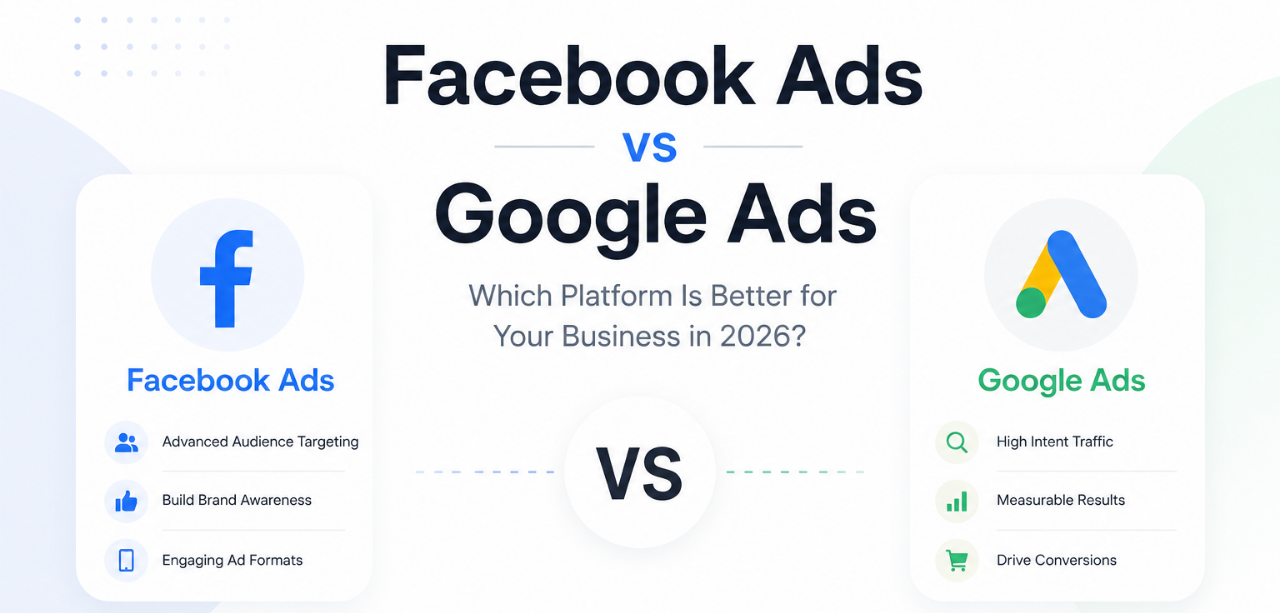
Facebook Ads vs Google Ads: Which Platform Is Better
Online advertising has become the backbone of modern business growth. Whether you’re a startup chasing your first 100 customers or an established e-commerce brand scaling toward seven figures, paid advertising platforms like Facebook Ads and Google Ads are often the fastest way to get in front of the right audience. But which one is right […]
Ready to Transform Your Advertising Strategy?
Join thousands of advertisers who trust Performoo to optimize their campaigns and maximize revenue.