Facebook Ads vs Google Ads: Which Platform Is Better
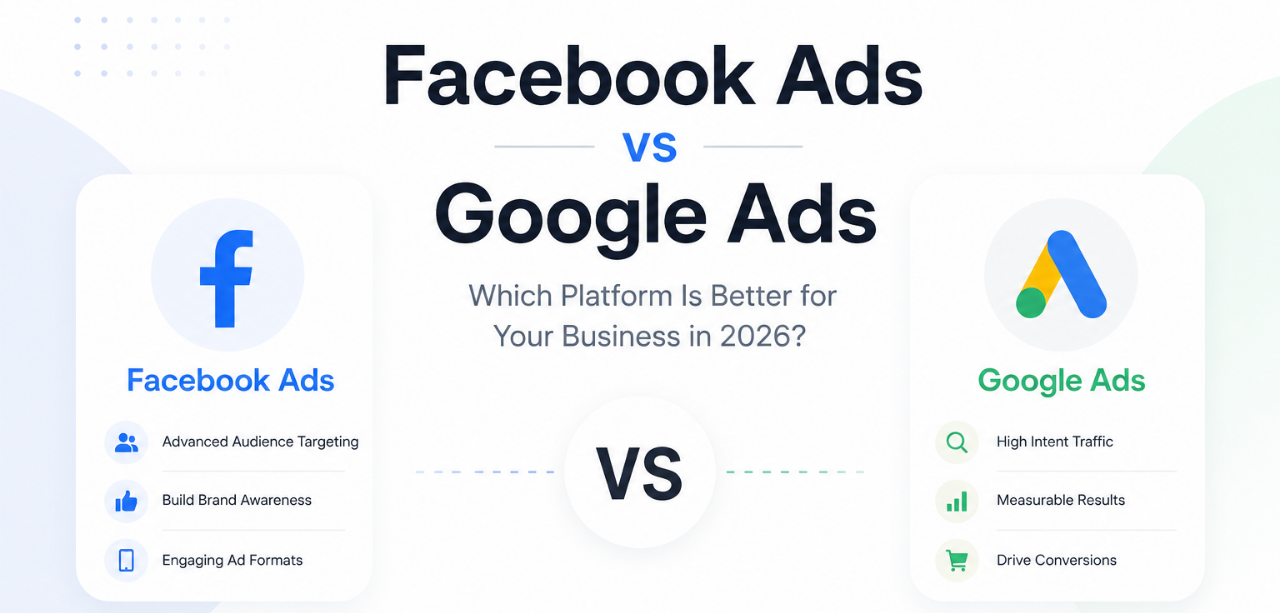
Online advertising has become the backbone of modern business growth. Whether you’re a startup chasing your first 100 customers or an established e-commerce brand scaling toward seven figures, paid advertising platforms like Facebook Ads and Google Ads are often the fastest way to get in front of the right audience.
But which one is right for your business? Facebook Ads excels at building demand through visually engaging campaigns that target people based on their interests and behaviors, while Google Ads captures demand from individuals who are actively searching for solutions. The “better” platform depends entirely on your goals, budget, industry, and where your customers are in their buying journey.
In this guide, we’ll break down how Facebook advertising and Google advertising work, compare costs and audience targeting, explore which paid advertising platform suits different business types, and share expert tips to help you maximize ROI in 2026.
What Are Facebook Ads?
Facebook Ads — which also run across Instagram, Messenger, and the Audience Network through Meta’s advertising platform — let businesses reach users based on demographics, interests, behaviors, and connections rather than search intent.
How it works: Advertisers create campaigns through Meta Ads Manager, choosing an objective such as awareness, traffic, engagement, leads, app promotion, or sales. Meta’s algorithm then delivers ads to the people most likely to take that action.
Targeting options: You can target by age, location, gender, interests, behaviors, job titles, and life events. Custom Audiences let you re-engage existing customers, while Lookalike Audiences help you find new prospects who resemble your best customers.
Ad placements: Facebook Ads can appear in the news feed, Stories, Reels, Marketplace, the right-hand column, and across Instagram and Messenger.
Best use cases: Brand awareness, product launches, retargeting website visitors, community building, and visually-driven e-commerce campaigns.
Campaign types: Image ads, video ads, carousel ads, collection ads, and native lead generation forms that capture details without leaving the platform.
What Are Google Ads?
Google Ads is built around intent-based marketing — showing ads to people who are already searching for products, services, or information related to what you sell.
Search Ads appear at the top of Google search results when someone types a relevant query, making them ideal for capturing high-intent buyers.
Display Ads appear as banners across millions of websites in the Google Display Network, useful for awareness and retargeting.
Shopping Ads showcase product images, prices, and store names directly in search results, making them a favorite for e-commerce brands running Google Ads for lead generation and sales.
YouTube Ads run as skippable or non-skippable video ads, combining broad reach with Google’s targeting capabilities.
Performance Max is Google’s AI-driven campaign type that automatically distributes a single campaign across Search, Display, YouTube, Gmail, Discover, and Maps to maximize conversions.
Because Google Ads targets people based on what they’re actively searching for, it tends to capture users closer to a purchase decision compared to Facebook’s interest-based targeting.
Facebook Ads vs Google Ads: Key Differences
Here’s a side-by-side look at how these two paid advertising platforms compare across the factors that matter most to advertisers.
| Factor | Facebook Ads | Google Ads |
| Audience targeting | Interests, demographics, behaviors, lookalikes | Keywords, search intent, demographics |
| User intent | Low to medium (discovery-driven) | High (search-driven) |
| Average CPC | $0.50 – $2.00 | $1.00 – $5.00+ |
| Conversion potential | Moderate; often needs nurturing | High for ready-to-buy searchers |
| Best industries | E-commerce, fashion, lifestyle, apps | Local services, B2B, legal, finance |
| Brand awareness | Excellent (visual, video-first) | Good (Display, YouTube, PMax) |
| Lead generation | Strong with native lead forms | Strong with high-intent search leads |
| E-commerce | Great for discovery and retargeting | Great for Shopping and purchase intent |
| Local businesses | Good for community awareness | Excellent for “near me” searches |
| Remarketing | Strong, cross-platform (Meta network) | Strong, across Search/Display/YouTube |
| Analytics | Meta Ads Manager, Pixel-based | Google Ads + Analytics, conversion tracking |
Cost Comparison
Average CPC: Facebook Ads typically have a lower average cost-per-click, often ranging from $0.50 to $2, while Google Ads CPCs can range from $1 to $5 or higher depending on industry competition.
CPM: Facebook generally offers a lower cost-per-thousand-impressions, making it cost-effective for awareness campaigns, while Google’s CPMs vary widely depending on placement and network.
Budget flexibility: Both platforms allow daily or lifetime budgets starting from just a few dollars a day, which is why Facebook Ads for small businesses and Google Ads for lead generation are both accessible entry points for newer advertisers.
Factors affecting ad costs: Industry competition, audience size, ad relevance or quality score, seasonality, and campaign objective all influence costs on both platforms.
ROI considerations: Facebook often delivers a lower cost-per-click but may require more nurturing before conversion, while Google Ads can deliver higher-intent leads that convert faster — sometimes justifying a higher CPC.
Audience Targeting
Demographic targeting: Both platforms let you target by age, gender, location, language, and device.
Interest targeting: Facebook’s interest targeting is based on pages users like, content they engage with, and declared interests — ideal for reaching people who don’t yet know they need your product.
Behavioral targeting: Facebook uses behaviors such as purchase history and device usage, while Google uses browsing and search behavior across its network.
Keyword targeting: Unique to Google Ads, keyword targeting lets you bid on exact search terms, capturing intent at the moment someone is looking for a solution.
Custom audiences: Both platforms allow you to upload customer lists or website visitor data to retarget existing contacts.
Lookalike audiences: Facebook’s Lookalike Audiences and Google’s Similar Audiences both help you find new prospects who resemble your best customers.
Remarketing: Both platforms support remarketing to past visitors, though Google’s remarketing spans Search, Display, and YouTube simultaneously.
Which Platform Is Better for Different Business Types?
- E-commerce stores: Use both — Google Shopping captures purchase intent while Facebook drives discovery and retargeting.
- Local businesses: Google Ads excels at “near me” searches, while Facebook builds local community awareness.
- B2B companies: Google Ads captures solution-aware searches; Facebook and Instagram support thought-leadership and brand content.
- SaaS brands: Google Ads is strong for high-intent demo and trial searches, with Facebook supporting top-of-funnel awareness and retargeting.
- Service businesses: Google Ads (especially Local Services and Search) works well for urgent, “near me” service searches.
- Startups: Facebook Ads offer a cost-effective way to build early brand awareness before scaling into Google Ads.
- Healthcare: Google Ads helps reach patients actively searching for providers, while Facebook supports education and community outreach (subject to ad policy compliance).
- Education: Facebook builds awareness for enrollment campaigns, while Google captures students actively searching for courses.
- Real estate: Facebook’s visual formats and lead forms suit listings, while Google reaches active buyers and sellers.
- Agencies: Most agencies run blended strategies, matching each platform to the client’s funnel stage and goals.
Pros and Cons
Facebook Ads Pros and Cons
- Pro: Lower average costs, especially for awareness campaigns
- Pro: Visual, engaging formats (video, carousel, Reels)
- Pro: Powerful audience-building tools (Lookalikes, Custom Audiences)
- Pro: Strong for impulse-driven and visually appealing products
- Pro: Built-in, low-friction lead generation forms
- Con: Lower purchase intent compared to search ads
- Con: Performance can be affected by privacy and tracking changes
- Con: Requires frequent creative refreshes to avoid ad fatigue
- Con: Often a longer path to conversion for considered purchases
Google Ads Pros and Cons
- Pro: Captures high-intent searchers who are ready to buy
- Pro: Wide reach across Search, Display, YouTube, and Shopping
- Pro: Performance Max automates cross-network optimization
- Pro: Excellent for local, “near me”, and service-based searches
- Pro: Detailed keyword-level performance reporting
- Con: Generally higher CPCs in competitive industries
- Con: Steeper learning curve for keyword and bid management
- Con: Less effective for pure brand-building and awareness
- Con: Requires ongoing keyword and negative keyword management
Can You Use Both Together?
Many of the most successful digital advertising strategies combine both platforms. Facebook Ads can build awareness and introduce your brand to new audiences through engaging visuals and video. Google Ads then captures that demand when those same prospects search for your brand or related solutions.
Retargeting strategies tie everything together: someone who watches a Facebook video ad but doesn’t convert can later be retargeted with a Google Search ad when they search for a solution — and vice versa.
This omnichannel approach builds a full-funnel marketing strategy — awareness, consideration, and conversion — where each platform reinforces the other instead of competing for the same budget.
Expert Tips to Maximize ROI
- Start with clear objectives: define whether you’re optimizing for awareness, leads, or sales before choosing a platform or budget.
- Install tracking pixels: set up Meta Pixel and Google conversion tracking before launching any campaign so you can measure real results.
- Test creatives: run multiple ad variations (images, videos, copy) to find what resonates with your audience.
- Optimize landing pages: make sure pages load fast, match your ad messaging, and include a clear call to action.
- Run A/B tests: continuously test audiences, bids, and creatives rather than “set and forget.”
- Monitor KPIs: track CPC, CTR, conversion rate, and cost-per-acquisition on a weekly basis.
- Scale winning campaigns: gradually increase budgets on top performers rather than making sudden jumps.
How Dilogs AI Helps Businesses Create Better Ads
Whichever platform you choose, ad performance ultimately comes down to creative quality. This is where Dilogs AI comes in. Dilogs AI is an AI-powered ad creative platform that helps marketers and businesses generate high-converting ad creatives, design engaging marketing visuals, and produce social media and digital advertising assets in a fraction of the usual time.
Instead of waiting days for a design team to turn around new creative concepts, teams can use Dilogs AI to speed up campaign production and reduce creative costs — testing more ad variations, faster. Combining the right advertising platform with AI-powered creative generation gives businesses a meaningful edge: better-performing ads, produced more efficiently, at a lower cost per asset.
Final Verdict
Choose Facebook Ads if your goal is to build brand awareness, showcase visually appealing products, or reach audiences who aren’t yet actively searching for what you offer — especially if you’re working with a smaller budget.
Choose Google Ads if you want to capture high-intent buyers who are actively searching for solutions, particularly for e-commerce, local services, and lead generation.
Use both together if you want a full-funnel strategy: Facebook to build awareness and demand, and Google to capture that demand when it converts into search intent.
Before investing, consider your budget, sales cycle, industry competitiveness, and how ready your target audience is to buy — then test, measure, and optimize from there.
FAQs
Q: Is Facebook Ads better than Google Ads?
Ans: Neither platform is universally “better.” Facebook Ads is generally stronger for brand awareness and visual product discovery, while Google Ads excels at capturing people who are already searching for a solution. The right choice depends on your business goals and where your customers are in their buying journey.
Q: Which platform has a higher ROI?
Ans: ROI varies by industry, offer, and execution. Facebook often delivers a lower cost-per-click, which can mean a higher ROI for awareness-stage campaigns, while Google Ads can produce a higher ROI for high-intent conversions despite a higher CPC, because the traffic is more likely to convert.
Q: Are Google Ads more expensive than Facebook Ads?
Ans: On average, Google Ads tends to have a higher cost-per-click than Facebook Ads, especially in competitive industries like legal, finance, and insurance. However, because Google traffic often has higher purchase intent, the higher cost can be offset by stronger conversion rates.
Q: Can small businesses use both platforms?
Ans: Yes. Both platforms support flexible daily budgets, making it possible for small businesses to test campaigns on Facebook Ads and Google Ads simultaneously, even with modest spend, and scale whichever performs best.
Q: Which platform is better for lead generation?
Ans: Both platforms offer strong lead generation tools. Facebook’s native lead forms reduce friction by keeping users on-platform, while Google Ads — especially Search and Local campaigns — captures leads who are actively searching, often resulting in higher-quality, sales-ready leads.
Other top blogs
Related Articles
Continue your learning journey with these related insights
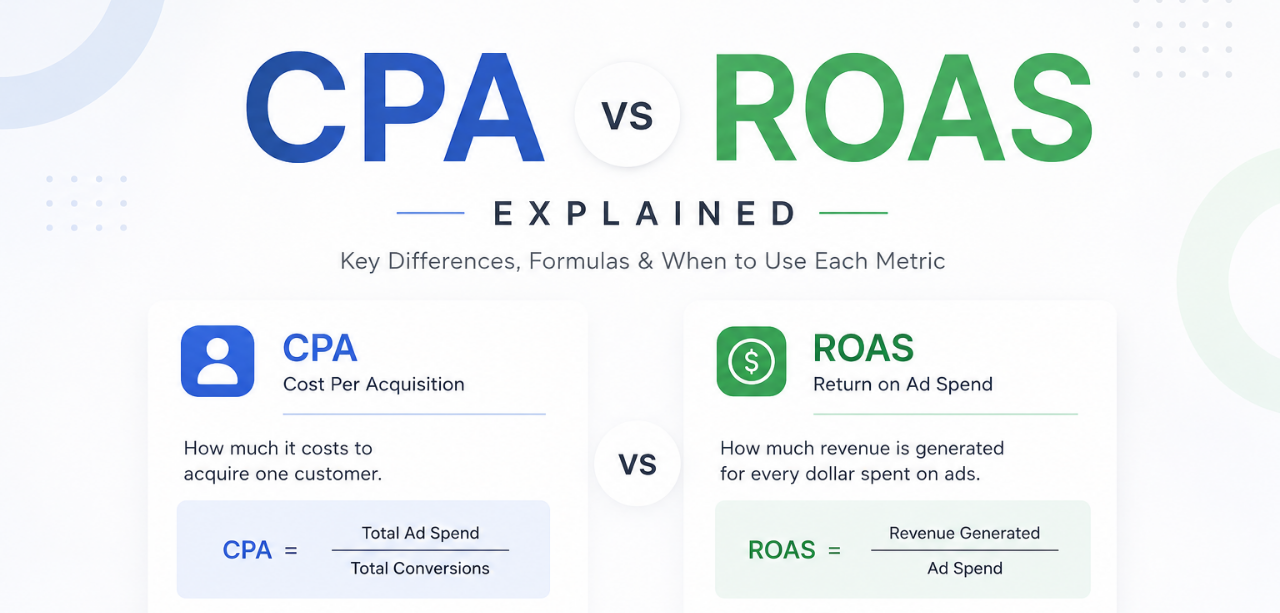
CPA vs ROAS Explained
Imagine running two ad campaigns. One gets you customers at a low cost, while the other generates massive revenue — but costs more per customer. Which campaign is actually better? The answer lies in understanding two of the most important marketing metrics: CPA and ROAS. Marketers often confuse these two metrics — or worse, optimize […]
10 Best Omni Channel Retail Solutions for Performance Marketers
Introduction Think about the last time you browsed a product on your phone, added it to your cart on a laptop, and then picked it up in-store. That seamless experience didn’t happen by accident — it was powered by omni channel retail solutions working behind the scenes. For performance marketers in 2026, this isn’t optional […]
Ready to Transform Your Advertising Strategy?
Join thousands of advertisers who trust Performoo to optimize their campaigns and maximize revenue.