What is Return on Marketing Investment (ROMI) and How to Measure it
Every marketing dollar you spend should work for you—but how do you know if it actually does?
If you’re investing in digital ads, email campaigns, content marketing, or social media but can’t clearly connect those expenses to revenue, you’re essentially flying blind. You might be generating clicks, impressions, and even leads, but are those activities actually profitable?
This is where Return on Marketing Investment (ROMI) becomes your most valuable metric.
ROMI helps you understand which marketing efforts are generating real revenue, which ones need optimization, and which should be cut entirely. It transforms marketing from a cost center into a measurable, accountable growth engine.
In this comprehensive guide, you’ll learn everything you need to know about ROMI—from basic calculations to advanced strategies that can dramatically improve your marketing performance.
What Is Return on Marketing Investment (ROMI)?
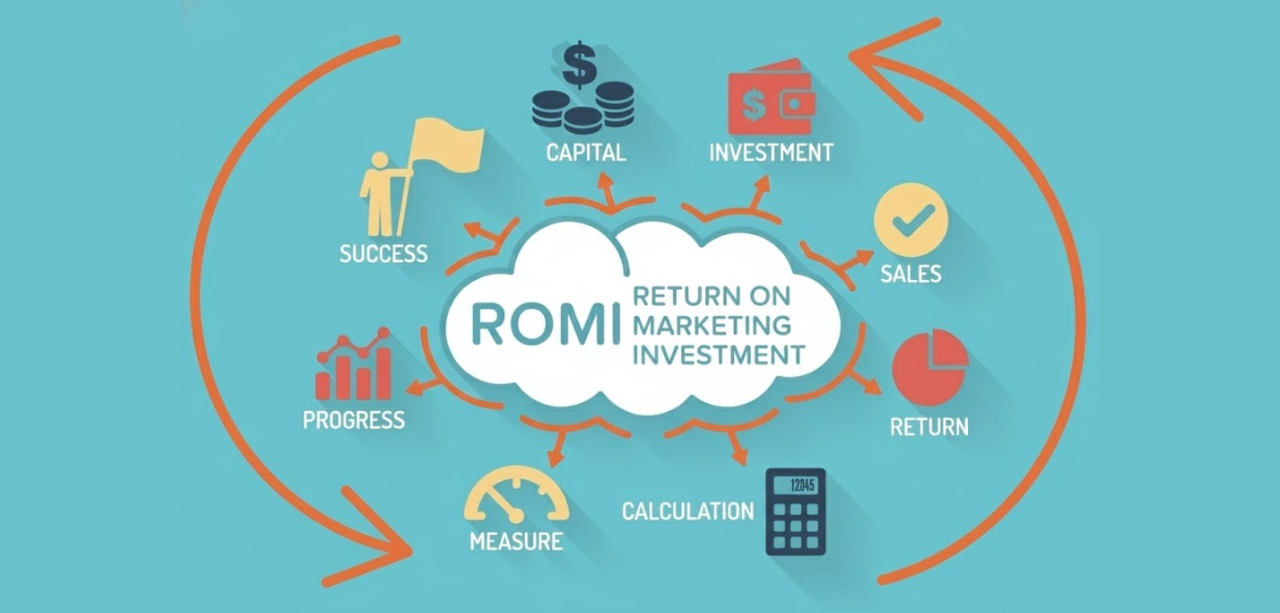
Return on Marketing Investment, or ROMI, measures how much revenue your marketing activities generate compared to what you spent on them. It’s a profitability metric that tells you whether your marketing investments are paying off.
Think of it this way: If you spend $10,000 on a Facebook ad campaign and it generates $50,000 in revenue, your ROMI is 5:1. For every dollar you invested in marketing, you earned five dollars back.
ROMI differs from general return on investment because marketing funds are typically considered operational expenses that are “risked” rather than capital tied up in assets like inventory or equipment.
Why ROMI Matters More Than Ever
Nearly half of marketers say ROI is the most important metric to company leadership, yet almost 40% admit they rarely evaluate how campaigns actually impact growth. This disconnect creates serious problems:
- Budget waste: You continue funding underperforming campaigns while high-performing ones remain underfunded
- Missed opportunities: Without clear data, you can’t identify which channels deserve more investment
- Lack of credibility: Marketing teams struggle to justify budgets or secure additional resources
- Poor strategic decisions: You’re making choices based on vanity metrics instead of actual profitability
ROMI fixes these issues by providing clear, quantifiable evidence of marketing’s contribution to your bottom line.
The Essential ROMI Formula (And How to Calculate It Correctly)
The basic ROMI formula looks deceptively simple:
ROMI = (Revenue from Marketing – Marketing Cost) / Marketing Cost × 100
Let’s walk through a practical example:
You spend $5,000 on a Google Ads campaign that generates $25,000 in revenue.
ROMI = ($25,000 – $5,000) / $5,000 × 100 = 400%
This means you earned $4 for every $1 spent, or a 4:1 ratio.
The Challenge: Calculating True Marketing Costs
Here’s where most marketers make critical mistakes. What exactly counts as “marketing cost”?
Many people only consider obvious expenses like ad spend. But for accurate ROMI, you need to include:
- Direct advertising costs: PPC, social media ads, sponsored content
- Creative production: Design work, copywriting, video production
- Technology and tools: Marketing automation software, analytics platforms, CRM systems
- Human resources: Salaries or contractor fees for people working on the campaign
- Distribution costs: Email service providers, content distribution networks
- Agency fees: Any external partners or consultants
Missing any of these costs will inflate your ROMI and lead to poor decisions.
Accounting for Sales Baseline
Not all sales come from marketing. Your business likely generates some level of organic revenue even without marketing activities. This is your sales baseline.
To calculate accurate ROMI, you need to subtract this baseline:
Refined ROMI = (Sales Growth – Sales Baseline – Marketing Cost) / Marketing Cost
If your company typically generates $100,000 in monthly revenue without marketing, and you spend $20,000 on a campaign that brings in $150,000, your actual marketing-driven revenue is only $50,000—not $150,000.
The Conversion Lag Problem
Not all marketing activities bring immediate returns; SEO, content marketing, and organic social media are long-term strategies that take time to build momentum.
If you measure ROMI too quickly after launching a campaign, you’ll underestimate its true value. This is especially dangerous because you might cut off strategies that would eventually deliver strong returns.
Best practice: Set appropriate measurement windows based on your typical sales cycle:
- Immediate response campaigns (flash sales, limited offers): 1-7 days
- Short-term campaigns (paid ads, email promotions): 30-60 days
- Long-term strategies (SEO, content marketing, brand awareness): 90-180 days or longer
ROMI vs. ROI vs. ROAS: Understanding the Differences
These three metrics are often confused, but they measure different things:
ROI (Return on Investment)
Formula: (Return – Investment) / Investment × 100
ROI is the broadest metric. It can measure returns on any type of investment—new equipment, real estate, employee training, or yes, marketing. It considers all business costs including operational expenses like rent and salaries.
ROMI (Return on Marketing Investment)
Formula: (Revenue from Marketing – Marketing Cost) / Marketing Cost × 100
ROMI specifically isolates marketing’s contribution to revenue. It filters out other business activities and focuses exclusively on marketing performance.
ROAS (Return on Ad Spend)
Formula: Revenue from Ads / Ad Spend
ROAS focuses solely on advertising investments and measures revenue generated per dollar spent on ads. It’s narrower than ROMI because it only tracks paid advertising, not other marketing activities like SEO, content marketing, or email campaigns.
When to use each metric:
- Use ROI for overall business performance and comparing marketing against other business investments
- Use ROMI to evaluate your entire marketing mix and justify marketing budgets
- Use ROAS to optimize specific advertising campaigns and ad platforms
What’s a Good ROMI? Benchmarks and Realistic Expectations
A solid ROMI benchmark is around 5:1, while an exceptional ROMI approaches 10:1, though anything above 10:1 is possible but shouldn’t be expected regularly.
Here’s how to interpret different ROMI ratios:
- Below 2:1: Unprofitable for most businesses unless you have very high margins
- 2:1: Break-even territory; covers costs but doesn’t generate meaningful profit
- 5:1: Strong performance; this should be your target
- 10:1: Exceptional; indicates highly optimized marketing
- Above 10:1: Outstanding but difficult to maintain consistently
Why Benchmarks Vary Significantly
Your target ROMI depends on several factors:
1. Business stage
- Startups in growth mode might accept 1:1 or even negative ROMI short-term to acquire market share
- Established companies focused on profitability need higher ROMI to justify continued investment
2. Industry and margins
- High-margin businesses (software, consulting) can operate profitably with lower ROMI
- Low-margin businesses (retail, ecommerce) need higher ROMI to remain viable
3. Marketing channel
- Paid advertising: Often targets 4:1 to 8:1
- Email marketing: Frequently achieves 10:1 or higher due to low costs
- SEO and content: May show lower initial ROMI but delivers compounding long-term value
- Brand awareness campaigns: May have lower direct ROMI but support other channels
4. Campaign objectives Not every marketing activity aims for immediate revenue. Brand awareness campaigns, customer retention efforts, and market expansion initiatives may have lower short-term ROMI but create valuable long-term benefits.
Calculate Your Break-Even ROMI
Instead of chasing generic benchmarks, calculate your specific break-even point:
- Determine your gross margin percentage
- Calculate minimum ROMI needed: (1 / Gross Margin) – 1
Example: If your gross margin is 60% (0.6), your break-even ROMI is (1/0.6) – 1 = 0.67, or roughly 2:3.
Any ROMI above this threshold generates profit. Set your target ROMI comfortably above break-even to ensure sustainable profitability.
The Real Challenges of Measuring ROMI (And How to Overcome Them)
Calculating ROMI sounds straightforward in theory. In practice, it’s remarkably complex.
Challenge #1: Attribution in Multi-Touch Customer Journeys
Modern customers don’t follow linear paths to purchase. A typical journey might look like:
- Sees your Facebook ad (doesn’t click)
- Later searches for your product on Google
- Clicks a Google ad, visits your website
- Leaves without purchasing
- Receives a retargeting ad on Instagram
- Signs up for your email list
- Receives three promotional emails
- Finally clicks an email link and makes a purchase
Which marketing activity deserves credit for this sale? The Facebook ad that created awareness? The Google ad that drove the first visit? The retargeting that brought them back? The email that closed the deal?
If you only credit the final touchpoint (the email), you’ll dramatically underinvest in awareness and consideration activities. If you credit everything equally, you won’t understand which channels truly drive conversions.
Solution: Implement multi-touch attribution models:
- Linear attribution: Gives equal credit to all touchpoints
- Time-decay attribution: Gives more credit to recent touchpoints
- U-shaped attribution: Credits first and last touches most heavily
- W-shaped attribution: Emphasizes first touch, lead conversion, and final purchase
- Data-driven attribution: Uses machine learning to assign credit based on actual conversion patterns
Challenge #2: Cross-Device Tracking
Customers switch between devices constantly. They might research on their laptop at work, compare options on their phone during lunch, and complete a purchase on their tablet at home.
Without proper identity resolution, these appear as three different people, making it impossible to accurately track the customer journey or calculate ROMI.
Solution: Implement robust tracking infrastructure:
- Use a customer data platform (CDP) that creates unified customer profiles across devices
- Implement cross-device tracking through authenticated logins
- Use probabilistic matching for anonymous visitors
- Ensure proper UTM parameter usage across all campaigns
Challenge #3: Data Silos and Integration Issues
Your marketing data lives in dozens of places: Google Ads, Facebook Ads Manager, email marketing platforms, CRM systems, analytics tools, and more. Each platform uses different metrics, tracking methods, and reporting standards.
Manually pulling data from each source and trying to create coherent ROMI reports is time-consuming, error-prone, and often impossible at scale.
Solution: Invest in marketing analytics platforms that:
- Automatically aggregate data from all marketing and sales sources
- Normalize data into consistent formats
- Connect marketing activities directly to revenue outcomes
- Provide real-time dashboards and automated reporting
Tools that specialize in marketing analytics can track every customer touchpoint, assign unique identifiers to prospects, and match marketing costs with actual revenue—giving you accurate ROMI data without manual spreadsheet work.
Challenge #4: Offline and Indirect Conversions
Not every customer journey happens online. Someone might:
- See your billboard, remember your brand, and visit your website later
- Attend your webinar, then call your sales team directly
- Read your blog post, then walk into your physical store
These conversions are real revenue driven by marketing, but they’re incredibly difficult to track.
Solution: Use creative tracking methods:
- Unique phone numbers for different marketing channels
- Promo codes specific to offline campaigns
- Post-purchase surveys asking “How did you hear about us?”
- Store location analytics to track foot traffic increases
- Sales team CRM entries documenting first contact source
Short-Term vs. Long-Term ROMI: A Critical Distinction
There are two forms of ROMI measurement: short-term ROMI, which tracks immediate revenue per dollar spent, and long-term ROMI, which assesses less tangible aspects like increased brand awareness and customer lifetime value.
Short-Term ROMI
This measures immediate or near-term revenue impact. It’s useful for:
- Direct response campaigns
- Promotional activities
- Paid advertising optimization
- Quick budget allocation decisions
Short-term ROMI is straightforward to calculate but can miss significant value from activities that create lasting benefits.
Long-Term ROMI
This captures the extended value marketing creates through:
- Brand equity: Increased awareness, consideration, and preference
- Customer lifetime value: Not just first purchase but total customer value over time
- Organic growth: SEO and content investments that compound over years
- Market position: Thought leadership and category dominance
For example, a content marketing campaign might show low short-term ROMI because it costs money to produce but generates little immediate revenue. However, over 12-24 months, that content:
- Ranks for valuable search terms
- Attracts consistent organic traffic
- Establishes authority in your industry
- Generates leads for years without additional investment
The long-term ROMI of this campaign could be 20:1 or higher, even though short-term ROMI was only 2:1.
Balance Both Perspectives
The most successful marketing strategies balance short and long-term ROMI:
- Use short-term ROMI to identify quick wins and optimize tactical execution
- Use long-term ROMI to justify strategic investments in brand building and sustainable growth channels
How Top Performers Use ROMI Data
Understanding your ROMI is just the starting point. Here’s how leading companies actually use this data to drive better results:
1. Optimize Budget Allocation
ROMI data reveals which channels deserve more investment and which should be reduced or eliminated.
Action steps:
- Calculate ROMI for each marketing channel quarterly
- Shift budget from channels with ROMI below 3:1 to those above 5:1
- Don’t immediately cut new channels; give them adequate time to mature
- Reserve 10-20% of budget for testing new channels and strategies
2. Improve Campaign Performance
ROMI shouldn’t be calculated only at the campaign level. Break it down further:
- By audience segment
- By creative version
- By messaging theme
- By offer type
- By time of day or week
This granular analysis reveals exactly what drives performance.
3. Set Data-Driven Marketing Goals
Instead of arbitrary targets like “increase leads by 20%,” use ROMI to set profit-driven goals:
- “Achieve 6:1 ROMI on paid search by Q3”
- “Increase email marketing ROMI from 8:1 to 10:1”
- “Launch new channel with break-even ROMI within 90 days”
4. Prove Marketing’s Business Impact
In boardrooms, quantifiable ROMI demonstrates marketing’s contribution to bottom-line results, securing larger budgets and executive buy-in while shifting perceptions from cost center to growth engine.
Regular ROMI reporting shows leadership:
- Exact revenue contribution from marketing
- How marketing spending translates to profit
- Which initiatives deliver best returns
- Why budget increases will generate proportional revenue growth
5. Benchmark Against Competitors
While internal ROMI tracking is most valuable, comparing against industry standards helps identify opportunities:
- Are your ROMI ratios significantly below industry averages? You may have execution problems
- Are they significantly above? You might be under-investing and missing growth opportunities
12 Proven Strategies to Improve Your ROMI
Now for the most important question: How do you actually increase ROMI?
1. Sharpen Your Audience Targeting
Wasting budget on people who will never buy from you destroys ROMI. The more precisely you target, the higher your returns.
Actions:
- Build detailed buyer personas based on actual customer data, not assumptions
- Use lookalike audiences based on your best customers
- Implement negative targeting to exclude low-value segments
- Create separate campaigns for different audience segments with tailored messaging
- Continuously refine targeting based on conversion data
2. Optimize Every Step of the Customer Journey
A leak anywhere in your funnel damages ROMI. Systematically improve each stage:
Awareness stage:
- Test different ad formats and placements
- Refine messaging to resonate with target audience
- Use compelling visuals that stop scrolling
Consideration stage:
- Ensure fast, mobile-optimized website experience
- Provide clear, valuable content that addresses customer concerns
- Use social proof (testimonials, reviews, case studies)
Conversion stage:
- Simplify checkout or lead capture process
- Remove unnecessary form fields
- Offer multiple payment or contact options
- Create urgency without being pushy
Retention stage:
- Implement email nurture sequences
- Develop loyalty programs
- Create upsell and cross-sell campaigns
3. Relentlessly Test and Iterate
Never assume you know what works best. Continuously testing different elements like headlines, ad copy, images, calls-to-action, and landing page layouts can lead to significant improvements in conversion rates, which directly increases ROMI.
Testing priorities:
- Headlines and value propositions
- Call-to-action buttons (text, color, placement)
- Images and videos
- Offer structures and pricing
- Landing page layouts
- Email subject lines and send times
Run proper A/B tests with statistical significance. Small incremental improvements compound over time.
4. Focus on High-ROMI Channels
Not all marketing channels perform equally. ROI-driven marketing focuses on high-performing channels rather than wasting resources on channels that don’t generate good returns.
Analyze your channel-level ROMI regularly:
- Double down on channels consistently delivering 6:1+ ROMI
- Optimize or reduce spending on channels below 3:1
- Test new channels with small budgets before committing
- Don’t follow trends blindly; focus on what works for YOUR business
5. Improve Customer Lifetime Value (CLV)
Acquiring a customer once and never selling to them again is expensive. Increasing repeat purchases dramatically improves ROMI.
Strategies:
- Create excellent onboarding experiences
- Develop email nurture sequences for new customers
- Build loyalty and rewards programs
- Offer complementary products
- Provide exceptional customer service
- Create community around your brand
If you can increase average CLV from $100 to $200, your customer acquisition ROMI doubles—without spending an extra dollar on marketing.
6. Reduce Customer Acquisition Cost (CAC)
Improving ROMI isn’t only about increasing revenue; you can also decrease costs.
Cost reduction tactics:
- Negotiate better rates with advertising platforms and vendors
- Improve quality scores in paid search to lower CPCs
- Develop owned channels (email list, community) to reduce dependence on paid media
- Create evergreen content that generates consistent traffic without ongoing costs
- Optimize conversion rates so you need fewer clicks to generate sales
7. Implement Marketing Automation
Manual marketing processes waste time and money while reducing effectiveness. Marketing automation tools help achieve more in less time and boost campaign efficiency and productivity.
Automation opportunities:
- Email drip campaigns triggered by behavior
- Lead scoring and qualification
- Personalized content recommendations
- Cart abandonment recovery
- Post-purchase follow-ups
- Social media scheduling and posting
Automation allows you to scale personalized marketing without proportionally increasing costs.
8. Leverage Data and Analytics
Implementing analytics and tracking key performance indicators helps determine if you’re doing an excellent job of improving ROMI.
Essential analytics practices:
- Set up proper conversion tracking across all platforms
- Create custom dashboards for real-time ROMI monitoring
- Implement event tracking for micro-conversions
- Use cohort analysis to understand customer behavior patterns
- Regularly audit data quality to ensure accuracy
9. Align Marketing and Sales Teams
Disconnect between marketing and sales destroys potential ROMI. Marketing generates leads that sales doesn’t follow up properly, or sales rejects qualified leads because of misaligned expectations.
Alignment strategies:
- Define lead qualification criteria together
- Create service-level agreements (SLAs) for lead response times
- Share regular reporting on lead quality and conversion rates
- Establish feedback loops so sales insights improve marketing targeting
- Celebrate shared wins, not siloed metrics
10. Experiment Strategically
Allocate 10-20% of your budget to testing new channels, strategies, and tactics. This prevents stagnation while managing risk.
Testing framework:
- Start with small pilot campaigns
- Set clear success criteria before launching
- Give experiments adequate time to generate meaningful data
- Scale winners quickly
- Kill losers fast without emotional attachment
11. Personalize at Scale
Generic marketing messages underperform. Personalization increases relevance, engagement, and conversion rates—all improving ROMI.
Personalization tactics:
- Segment email lists by behavior, demographics, and interests
- Use dynamic website content based on visitor characteristics
- Create audience-specific landing pages
- Customize ad creative and messaging by segment
- Implement product recommendations based on browsing and purchase history
12. Focus on Quality Over Quantity
More traffic doesn’t always mean better ROMI. Focus on attracting and converting the right people.
Quality-focused approaches:
- Target high-intent keywords rather than broad, competitive terms
- Create in-depth, valuable content instead of thin, SEO-focused pages
- Build genuine relationships rather than chasing follower counts
- Prioritize channels where your ideal customers actually spend time
Essential Tools for Tracking and Improving ROMI
The right technology stack makes accurate ROMI measurement possible. Here are the categories you need:
Analytics and Attribution
- Google Analytics 4: Essential for website traffic and conversion tracking
- Marketing attribution platforms: Connect all touchpoints to revenue
- Data visualization tools: Tableau, Looker, Power BI for comprehensive reporting
Marketing Automation
- Email platforms: Mailchimp, HubSpot, ActiveCampaign for automated campaigns
- Marketing automation suites: HubSpot, Marketo, Pardot for complex workflows
- Social media management: Hootsuite, Sprout Social, Buffer for efficient posting and engagement
Data Integration
- Customer data platforms: Segment, mParticle for unified customer views
- Marketing analytics aggregators: Pull data from all platforms into single dashboards
- API connectors: Zapier, Make for connecting disparate systems
Testing and Optimization
- A/B testing tools: Optimizely, VWO, Google Optimize for experiments
- Heatmap and session recording: Hotjar, Crazy Egg to understand user behavior
- Survey tools: Typeform, SurveyMonkey to gather customer insights
Common ROMI Mistakes to Avoid
Even experienced marketers make these errors that distort ROMI calculations:
1. Ignoring Indirect Costs
Counting only ad spend while overlooking salaries, tools, and production expenses inflates ROMI artificially.
2. Attribution Over-Simplification
Crediting only the last click ignores the full customer journey and undervalues awareness and consideration channels.
3. Measuring Too Soon
Expecting immediate returns from long-term strategies like SEO or content marketing leads to premature abandonment of effective tactics.
4. Comparing Incomparable Metrics
Comparing ROMI across channels with different sales cycles, price points, or objectives creates misleading conclusions.
5. Focusing Only on Short-Term Returns
Optimizing purely for immediate ROMI sacrifices long-term brand building and sustainable growth.
6. Ignoring Customer Lifetime Value
Evaluating campaigns only on first purchase ignores the massive impact of repeat customers and referrals.
7. Not Establishing Baselines
Failing to account for organic sales growth attributes revenue to marketing that would have occurred anyway.
The Future of ROMI: What’s Changing in 2025 and Beyond
ROMI measurement and optimization continue evolving. Here’s what’s on the horizon:
AI-Driven Predictive Analytics
Artificial intelligence enables prediction of campaign success before launch, reducing risk and improving investment returns.
Machine learning models will:
- Forecast ROMI of proposed campaigns before spending
- Automatically optimize budget allocation across channels in real-time
- Identify patterns humans miss in massive datasets
- Predict customer lifetime value more accurately
Privacy-First Attribution
As third-party cookies disappear and privacy regulations tighten, attribution becomes more challenging but not impossible.
Emerging solutions include:
- First-party data strategies leveraging direct customer relationships
- Privacy-safe attribution models using aggregate data
- Server-side tracking replacing browser-based pixels
- Consent-based identity resolution
Integration of Online and Offline Data
The line between digital and physical marketing continues blurring. Advanced systems now connect:
- In-store purchases to digital marketing touchpoints
- TV and radio advertising to website traffic and sales
- Direct mail campaigns to online conversion tracking
- Event attendance to subsequent purchase behavior
Real-Time ROMI Optimization
Static monthly or quarterly ROMI reports are giving way to real-time dashboards that enable immediate optimization.
Modern platforms provide:
- Live ROMI updates throughout campaign runtime
- Automated alerts when performance exceeds or falls below thresholds
- Instant budget reallocation recommendations
- Predictive forecasts of end-of-period performance
Putting It All Together: Your ROMI Action Plan
Here’s how to implement everything you’ve learned:
Month 1: Establish Baseline and Infrastructure
- Audit current tracking and analytics setup
- Identify data gaps and integration needs
- Set up proper conversion tracking across all channels
- Calculate current ROMI for each major marketing initiative
- Establish your break-even ROMI based on actual margins
Month 2: Analyze and Prioritize
- Break down ROMI by channel, campaign, audience, and time period
- Identify top performers (6:1+ ROMI) and underperformers (below 3:1)
- Determine quick wins—areas where small changes could significantly improve results
- Set specific, measurable ROMI targets for each channel
Month 3: Optimize and Experiment
- Reallocate budget from low-ROMI to high-ROMI channels
- Launch A/B tests on underperforming campaigns
- Implement quick wins identified in Month 2
- Begin testing new channels or strategies with 10-15% of budget
Ongoing: Measure, Learn, and Iterate
- Review ROMI metrics weekly or bi-weekly
- Hold monthly deep-dive analysis sessions
- Share insights across marketing and sales teams
- Continuously refine attribution models as you learn
- Celebrate wins and learn from failures
READ ALSO:- What is Ad Intelligence?
Final Thoughts: Making ROMI Your Competitive Advantage
In an era where marketing budgets face intense scrutiny and competition for customer attention has never been fiercer, ROMI separates successful marketers from struggling ones.
Companies that measure and optimize ROMI consistently:
- Generate more revenue from the same budget
- Make data-driven decisions instead of following hunches
- Prove marketing’s value to leadership and secure larger budgets
- Identify opportunities competitors miss
- Scale efficiently without proportional cost increases
The marketers who win in 2025 and beyond won’t be those with the biggest budgets—they’ll be those who extract maximum value from every dollar spent.
Start measuring your ROMI today. Not next quarter, not next month—today.
Calculate your current ROMI across all major channels. Identify your biggest opportunity for improvement. Take one action this week that will move the needle.
Your marketing budget is too valuable to spend without knowing exactly what return it generates. With the frameworks, formulas, and strategies in this guide, you now have everything you need to turn marketing from a cost center into your most powerful growth engine.
Related Articles
Continue your learning journey with these related insights
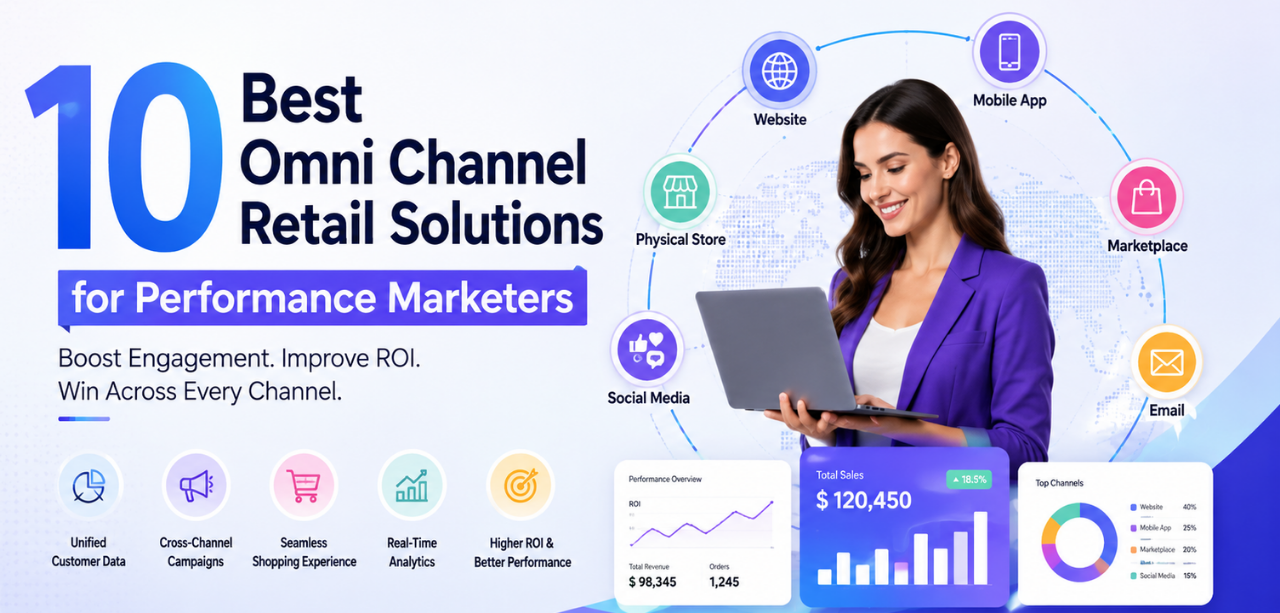
10 Best Omni Channel Retail Solutions for Performance Marketers
Introduction Think about the last time you browsed a product on your phone, added it to your cart on a laptop, and then picked it up in-store. That seamless experience didn’t happen by accident — it was powered by omni channel retail solutions working behind the scenes. For performance marketers in 2026, this isn’t optional […]
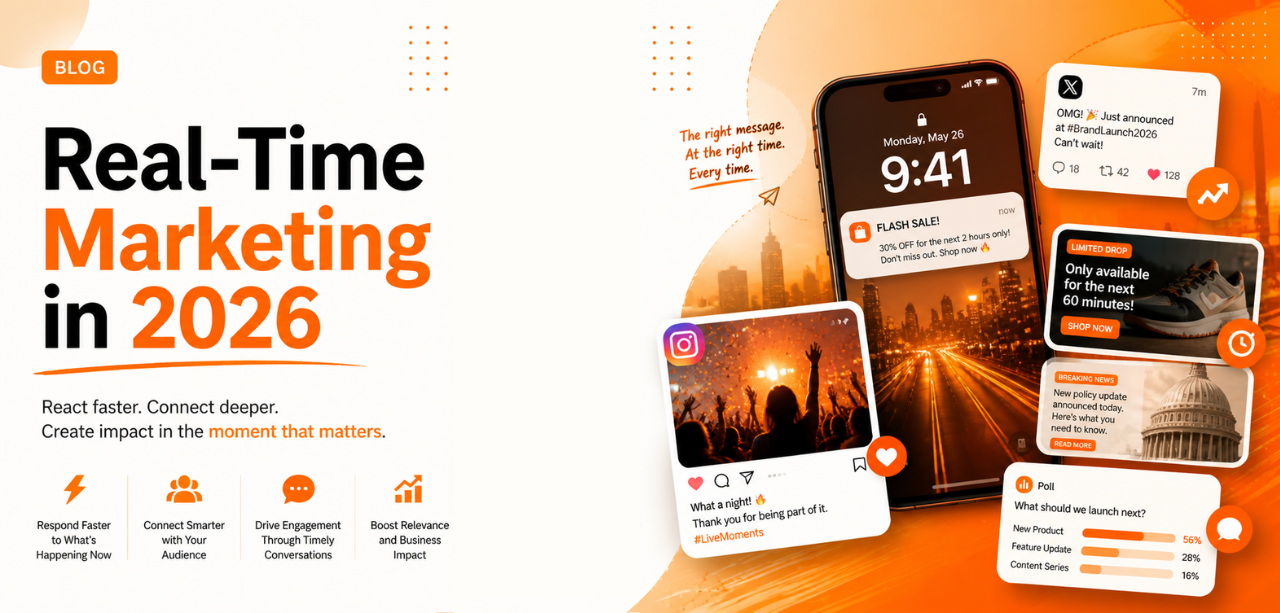
Real-Time Marketing in 2026: Strategy, Tools, and Implementation Guide
73% of consumers expect brands to understand their needs before they even reach out. In 2026, meeting that expectation means showing up at the right moment, on the right channel, with the right message, not hours later, but right now. Real-time marketing is the practice of responding to live events, customer behaviors, and trending moments […]

SEO vs PPC: Which Strategy Drives Better Growth in 2026?
The digital landscape for US businesses has never been more competitive. As we navigate 2026, the traditional battle of SEO vs PPC has evolved into a sophisticated game of data and intent. Whether you are a SaaS founder in Austin or an e-commerce giant in New York, choosing the right seo and ppc management strategy […]
Ready to Transform Your Advertising Strategy?
Join thousands of advertisers who trust Performoo to optimize their campaigns and maximize revenue.