How AI Uses Harmonized Ad Data to Optimize Campaigns
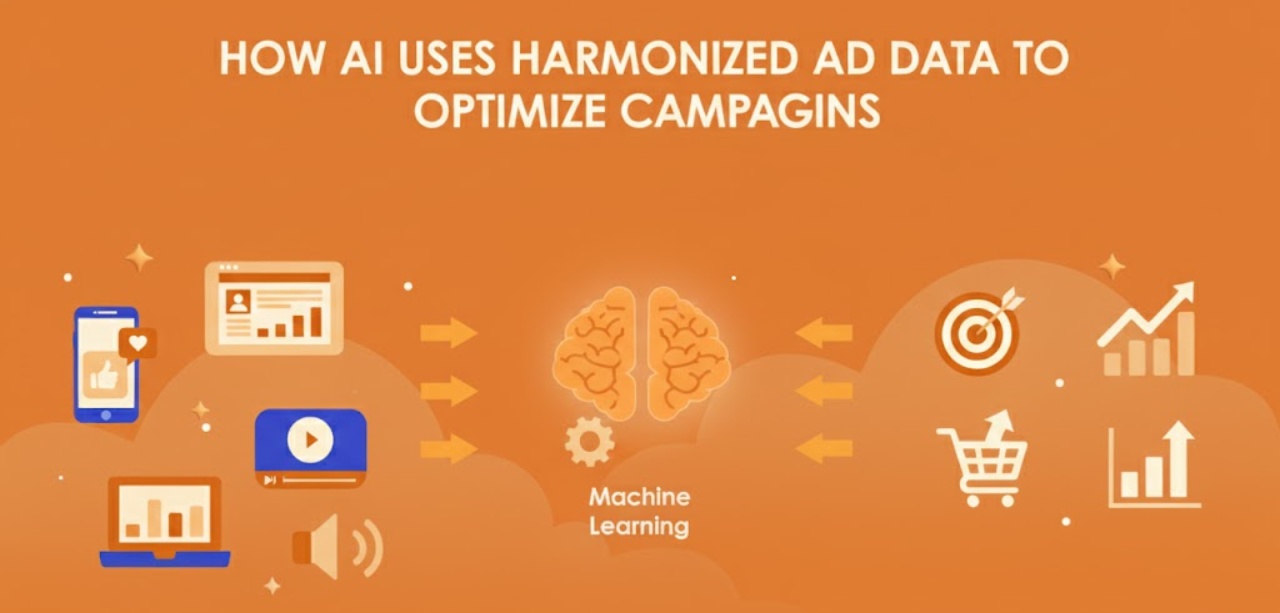
Digital advertising wastes billions every year. Poor timing, wrong audiences, and scattered data are the main problems. AI fixes this by combining data from all your platforms into one smart system that actually works.
What Is Harmonized Ad Data?
Harmonized ad data means combining information from all your advertising platforms into one place. Instead of checking Google Ads, Facebook, Instagram, and LinkedIn separately, you see everything together.
AI takes metrics like click rates, conversions, and audience details from each platform. Then it creates one unified view. This shows you insights you’d never spot when your data sits in separate places.
Why AI Fails Without Harmonized Ad Data
Even the best AI gives you bad advice when it gets messy data. Here’s why you must harmonize your data first:
You Can’t Compare Platforms – Facebook counts conversions one way. Google counts them differently. When AI tries to compare them, it’s comparing apples to oranges. You might spend more money on the wrong platform.
Bad Data = Bad Results – AI only works when you feed it good data. If Meta uses 7-day tracking and Google uses 30-day tracking, the numbers don’t match. The AI will make wrong choices every time.
Budget Decisions Become Random – Without matching metrics, AI can’t tell which platform really performs better. It might take money away from your best channel just because the data looked wrong.
Real Example: A retail advertiser ran ads on Meta and Google. Meta showed $45 per customer. Google showed $32 per customer. They spent more on Google because it looked cheaper.
Then they fixed their data tracking to match on both platforms. Surprise! Meta’s real cost was $28 per customer. AI shifted the budget to Meta automatically. Their costs dropped 34% in just 3 days. The problem wasn’t the platform. It was the messy data.
How AI Transforms Your Data Into Smart Campaigns
Real-Time Performance Tracking
Old campaigns relied on weekly check-ins and guesswork. AI watches thousands of data points every second. It tracks clicks, bounces, time on site, devices, and locations all at once.
Machine learning spots failing ads in minutes, not days. It adjusts budgets, targeting, and creative elements automatically to get better results.
Predicting What Works Next
AI doesn’t just react to problems. It predicts them before they happen. By studying your past campaigns and current user behavior, it forecasts which ads will work best tomorrow.
The system recommends changes before you waste money. This beats manual management every time.
Smart Budget Distribution
When all your data flows together, AI moves money to wherever it works best. Instead of setting fixed budgets for each platform, the system shifts resources in real time.
If Instagram suddenly works better than Facebook for teens, AI moves budget there instantly. This keeps your entire marketing system running at peak performance.
The Context Advantage
Most AI just figures out who to target. Better systems also know when to show ads. They analyze over 200 signals from user devices to understand if someone is relaxed, busy, or ready to buy.
Then they time your ad delivery for maximum impact. The right message hits the right person at exactly the right moment.
What You Get With AI-Harmonized Advertising
Better Targeting – AI segments your audience across age, location, browsing history, and behavior patterns. No human can match this precision.
Personal Messages – Content changes automatically based on what each user likes and does. This creates relevant experiences that drive sales.
Automatic Testing – AI constantly tests different ad versions, messages, and placements without you lifting a finger.
Reading Customer Feelings – Natural language AI reads customer reviews, feedback, and social media posts. This tells you what people really think and want.
Always Improving – The system learns from every campaign. It gets smarter and more effective over time.
READ ALSO:- Aggregated vs Non-Aggregated Data
How to Start Using AI Ad Optimization
First, connect all your advertising platforms. You need good data collection, thorough cleaning to remove errors, and proper storage.
Pick AI tools that match your goals. Google Ads and Facebook now include AI features for automatic bidding and predictions. Advanced options give you deeper insights across all platforms.
Watch your key numbers through AI dashboards that update in real time. Look for systems that give you clear actions to take, not just raw data.
Set up feedback loops where results teach the AI what works. The best approach combines AI intelligence with human strategy.
Privacy Matters
Combining data from many platforms raises privacy questions. Make sure your AI follows rules like GDPR and CCPA. Choose solutions that handle data ethically and tell users how you use their information.
Look for platforms that analyze data on the user’s device when possible. This protects privacy while still optimizing your ads.
What’s Coming Next
As digital worlds expand to include AR, VR, and smart devices, harmonized data becomes even more important. AI will manage campaigns across more touchpoints than ever, creating smooth experiences that follow users everywhere.
Generative AI now creates ad text, images, and videos for specific audiences. This lets you test many creative versions quickly to find what works.
Companies that unify their ad data and use AI to learn from it are winning. Manual campaign management simply can’t keep up with AI speed and accuracy.
READ ALSO:- Understanding Ad-Tech
Taking Action
Winners in digital advertising are moving fast toward AI and harmonized data. Start by checking where your data is scattered. Find ways to connect it. Pick tools that fit your business.
You don’t need perfect setup on day one. Start with basic platform connections. Add AI features step by step. Improve based on your results.
Performoo is built specifically for harmonized ad data. It gives you AI-driven insights without manual work across all your channels. If you run campaigns on multiple platforms and struggle with matching data, purpose-built solutions save you weeks of technical work.
Winners treat harmonized data and AI as essential tools, not nice-to-haves. Your advantage comes from unifying intelligence across every ad channel—starting now.
Related Articles
Continue your learning journey with these related insights
Why Advertisers Need Data Harmonization to Fix Fragmented Ad Data
Running ads across Google, Meta, TikTok, and other platforms? Your data is probably a mess. Each platform uses different naming conventions, tracks conversions differently, and reports metrics at varying levels. Data harmonization fixes this chaos transforming scattered, inconsistent ad data into a unified format that drives confident campaign decisions. What is Data Harmonization? Data harmonization […]
Aggregated vs Non-Aggregated Data
Understanding the difference between aggregated and non-aggregated data is crucial for anyone working with analytics, privacy compliance, or data management. This guide breaks down everything you need to know. What is Aggregated Data? Aggregated data is information that has been compiled and summarized from multiple individual data points into a consolidated format. Instead of seeing […]
Ready to Transform Your Advertising Strategy?
Join thousands of advertisers who trust Performoo to optimize their campaigns and maximize revenue.