10 Best Ad Intelligence Tools in 2026
Introduction
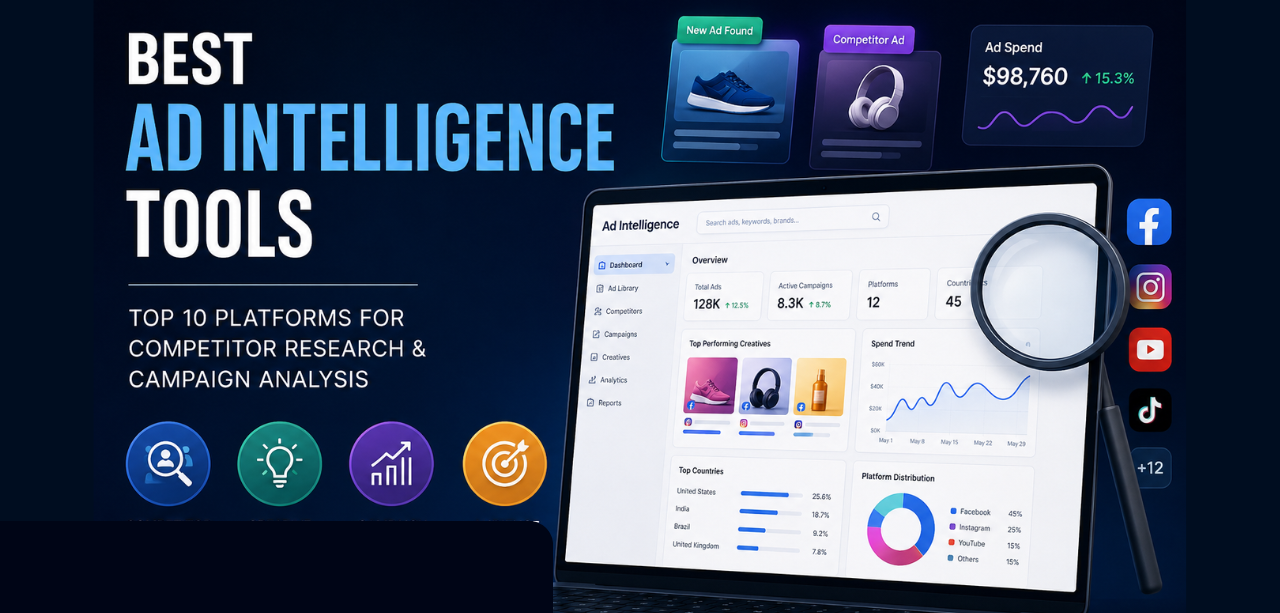
Advertising has become a game of visibility. Every brand, in every category, is competing for the same limited attention on Facebook, Google, TikTok, and beyond — and the brands that win are rarely the ones guessing. They’re the ones watching the market closely: what competitors are running, which creatives are staying live the longest, and where audience attention is shifting.
That’s the job of an ad intelligence tool. Instead of relying on instinct or trial-and-error testing, marketers use these platforms to see real competitor campaigns, benchmark performance patterns, and spot creative and targeting trends before they become obvious to everyone else. Used well, ad intelligence shortens the distance between an idea and a working campaign, and reduces the amount of ad spend wasted on approaches that have already been proven not to work.
This guide breaks down what ad intelligence tools actually do, the features worth paying for, and an honest look at ten of the most widely used platforms in 2026 — so you can pick the one that fits your budget, channels, and team.
What Is an Ad Intelligence Tool?
An ad intelligence tool is a platform that collects, indexes, and lets you search live and historical advertising data — creatives, copy, targeting signals, publishers, and (in some cases) estimated spend — mostly from public ad libraries, tracking pixels, and web crawling.
How It Works
Most tools continuously scan ad networks and public ad libraries (like Meta’s Ad Library), index the creative and metadata they find, and make that dataset searchable by keyword, advertiser, industry, country, or ad format. Some layer AI on top to flag which ads are trending or likely performing well based on how long they’ve stayed active.
Why It Matters
Ad intelligence turns a black box — what’s actually working for competitors — into something you can observe directly. That visibility informs creative direction, targeting decisions, and even pricing and positioning.
Ad Intelligence vs. Analytics Tools
Analytics tools (like Google Analytics or a platform’s own ads manager) measure your own campaigns after the fact. Ad intelligence tools look outward — at the broader market and your competitors — before you’ve spent a dollar. The two are complementary: intelligence tools inform strategy, analytics tools measure results.
Benefits of Using Ad Intelligence Tools
- Competitor research: See exactly which ads a competitor is running, and for how long.
- Creative inspiration: Study high-performing formats, hooks, and messaging patterns across a category.
- Campaign benchmarking: Compare your creative cadence and messaging against category norms.
- Audience insights: Understand which segments competitors are targeting and how that shifts over time.
- Trend discovery: Spot emerging formats (like short-form video or interactive ads) early.
- Better ROI: Reduce wasted spend by avoiding approaches the market has already tested and dropped.
- Faster decision-making: Skip lengthy internal debates by grounding creative decisions in real market data.
Features to Look For
Not every ad intelligence platform is built the same way. When evaluating options, look closely at:
- Competitor ad tracking — can you follow a specific advertiser or domain over time?
- Creative library — is there a searchable archive of past and current ad creatives?
- Search filters — keyword, country, platform, format, and engagement filters that narrow results quickly.
- AI-powered insights — trend detection, performance scoring, or creative recommendations.
- Audience analysis — demographic and interest-based targeting data, where available.
- Campaign history — how far back does the data go, and how often is it refreshed?
- Multi-platform support — coverage across Meta, Google, TikTok, native, and programmatic display.
- Reporting — exportable dashboards and summaries for stakeholders.
- Collaboration — shared boards or seats for teams and agencies.
- Export options — CSV, PDF, or API access for feeding data into other systems.
Top 10 Best Ad Intelligence Tools
The following is an unbiased overview based on publicly available information as of 2026. Pricing changes frequently, so always confirm current rates on each vendor’s site before purchasing.
1. Meta Ads Library
Meta’s own free, public ad archive lets anyone search active ads running across Facebook and Instagram, including political and issue ads with extended disclosure requirements.
Best for: Quick, no-cost verification of what a specific advertiser is currently running on Meta platforms.
Key features: Free public search by advertiser or keyword, ad start dates, and (for regulated categories) spend ranges.
Pros: Completely free; official first-party data; no sign-up required.
Cons: Meta-only; limited filtering and no historical trend analysis; no creative performance estimates.
Pricing: Free.
2. BigSpy
A broad multi-platform ad database covering Facebook, Instagram, TikTok, YouTube, Pinterest, and several ad networks, positioned as one of the largest creative archives available.
Best for: Teams that advertise across many channels and want one dashboard for cross-platform creative discovery.
Key features: Advertiser and domain search, keyword exclusion filters, trending ad recommendations, e-commerce product tracking.
Pros: Wide platform coverage; affordable entry-level plans; useful exclusion filters for noisy niches.
Cons: Free and entry tiers are limited; data depth on any single platform can be shallower than specialist tools.
Pricing: Paid plans typically start in the single digits per month, with higher tiers for full multi-platform access.
3. AdSpy
A long-standing, Meta-focused ad research tool known for its large Facebook and Instagram database and detailed filtering options.
Best for: Media buyers and affiliates doing deep, filter-heavy research specifically on Meta ads.
Key features: Affiliate network filters, landing page technology detection, unlimited search on its single plan.
Pros: Very deep filters; one flat plan with full feature access; large, mature database.
Cons: Meta-only coverage; no free plan or ongoing trial; a flat monthly rate regardless of usage.
Pricing: Single flat-rate monthly subscription (typically in the $100–$150 range).
4. PowerAdSpy
A cross-network ad research tool covering Facebook, Instagram, Google, YouTube, and several native ad networks.
Best for: Teams that need visibility beyond Meta, including native and video placements.
Key features: Engagement-based filtering, multi-platform search, Chrome extension for saving ads.
Pros: Covers more networks than Meta-only tools; intuitive engagement filters.
Cons: Tiered pricing can gate useful features behind higher plans; database freshness varies by network.
Pricing: Tiered plans, typically ranging from around $50 to over $300 per month depending on features.
5. Similarweb
A digital intelligence platform best known for web traffic analytics, which also offers advertising and marketing channel insights as part of its broader suite.
Best for: Teams that want ad insights combined with broader competitive traffic and market data.
Key features: Traffic and referral analysis, display ad insights, market and industry benchmarking.
Pros: Strong for understanding overall digital market position, not just ads; useful for strategic planning.
Cons: Ad-specific data is less deep than dedicated ad spy tools; full features sit behind higher-tier plans.
Pricing: Custom, tiered pricing based on business size and data needs.
6. Semrush Advertising Research
A module within the Semrush SEO and marketing suite that reveals competitors’ Google Ads history, including keywords and ad copy variations over time.
Best for: Teams already using Semrush for SEO who want integrated PPC competitor research.
Key features: Competitor keyword and ad copy history, estimated traffic and position tracking, budget estimates.
Pros: Seamless integration with SEO and keyword research workflows; strong historical Google Ads data.
Cons: Focused on search/PPC ads rather than social or display; full suite subscription can be costly for ads-only use.
Pricing: Bundled within Semrush’s paid plans, generally starting around $130–$150 per month.
7. SpyFu
A competitive research tool centered on Google Ads and organic search, showing which keywords and ad copy a domain has used historically.
Best for: PPC managers who want long-term keyword and ad copy history for search campaigns.
Key features: Keyword-level competitor history, ad copy archive, budget and click estimates.
Pros: Deep historical search-ads data; affordable relative to enterprise suites.
Cons: Focused on search advertising only; limited value for social or display-heavy strategies.
Pricing: Entry plans typically start around $40 per month.
8. Pathmatics
Now part of Sensor Tower, Pathmatics is an enterprise-grade platform tracking display, social, video, and connected-TV advertising with creative-level detail and modeled spend estimates.
Best for: Larger brands and agencies running active, ongoing competitive analysis across multiple channels.
Key features: Cross-channel spend estimates, creative-level tracking, publisher-level placement data.
Pros: Very deep, multi-channel data; strong for enterprise media planning.
Cons: Enterprise pricing puts it out of reach for small teams; typically requires a sales conversation to access.
Pricing: Custom enterprise pricing; not publicly listed.
9. Moat by Oracle — Now Discontinued
Moat was a well-regarded ad analytics and attention-measurement tool acquired by Oracle in 2017. Oracle exited its advertising business in 2024 and wound down its ad products, including Moat, so it’s no longer available as an active platform. It’s included here for context, since many buyers still search for it by name.
Best for: N/A — historical reference only.
Key features: N/A.
Pros: N/A.
Cons: No longer operating; not a viable option for new buyers.
Pricing: Discontinued. Teams looking for a comparable attention- or creative-analytics tool should evaluate alternatives such as Pathmatics, Vivvix (formerly Kantar/Numerator media intelligence), or Adbeat.
10. Anstrex
A competitive intelligence suite built around native, push, and pop ad formats, with a separate module covering TikTok ads and e-commerce/dropshipping research.
Best for: Affiliate marketers and performance teams focused on native, push, and pop traffic sources.
Key features: Landing page capture and redeploy tool, advertiser and network-level search, CPC bid visibility on push campaigns.
Pros: Deep coverage of formats other tools often skip; landing page tools save manual research time.
Cons: No Facebook coverage; separate products are priced and sold individually rather than in one bundle.
Pricing: Individual product plans generally start under $100 per month, with bundles priced higher.
Comparison Table
A quick side-by-side view of how these platforms differ. Confirm exact pricing directly with each vendor, as plans change frequently.
| Tool | Best For | Platforms | Competitor Tracking | AI Features | Free Plan | Starting Price |
| Meta Ads Library | Verifying live Meta ads | Facebook, Instagram | Basic (public ads only) | None | Yes (free, public) | Free |
| BigSpy | Multi-platform creative discovery | 9+ platforms incl. TikTok | Advertiser & keyword search | Trending picks | Limited free tier | ~$9/mo |
| AdSpy | Deep Meta ad research | Facebook, Instagram | Advanced filters | None | No | $149/mo flat |
| PowerAdSpy | Cross-network social ads | FB, IG, Google, YouTube, native | Engagement filters | Limited | No | ~$49–99/mo |
| Similarweb | Digital market benchmarking | Web & display | Traffic & ad spend estimates | Yes | Limited free tools | Custom / tiered |
| Semrush Advertising Research | PPC & SEO-integrated research | Google Ads | Competitor keyword & ad copy history | Yes | Limited trial | From ~$139/mo (suite) |
| SpyFu | PPC keyword & competitor ads | Google Ads | Historical ad copy & keywords | Limited | Limited free searches | From ~$39/mo |
| Pathmatics | Enterprise multi-channel spend tracking | Display, social, video, CTV | Deep creative & spend intelligence | Yes | No | Custom (enterprise) |
| Moat by Oracle (discontinued) | Legacy reference only | Formerly cross-channel | N/A | N/A | N/A | No longer available |
| Anstrex | Native, push & pop ad research | Native, push, pop, TikTok | Landing page + advertiser tracking | AI ad generator (add-on) | Short trial only | From ~$69.99/mo |
How to Choose the Right Ad Intelligence Tool
There’s no single “best” tool — the right choice depends on a few practical factors:
- Budget: Free tools like Meta Ads Library work for quick checks; paid tools make sense once research becomes a regular part of your workflow.
- Business size: Enterprise teams often need Pathmatics-level depth; smaller teams may get more value from a lighter, cheaper tool.
- Advertising channels: Match the tool to where you actually spend — a Meta-only tool won’t help if your budget is mostly on Google or native networks.
- Ease of use: A tool with strong data but a steep learning curve can slow a team down more than it helps.
- Reporting needs: If you need to share findings with stakeholders, prioritize tools with clean export and dashboard options.
- AI capabilities: AI-driven trend detection can save research time, but shouldn’t replace human judgment on what’s actually relevant to your brand.
Common Mistakes to Avoid
- Copying competitor ads instead of learning from them — direct copies rarely perform as well as the original, and can create brand or legal risk.
- Ignoring audience insights — creative alone doesn’t explain performance; targeting context matters just as much.
- Not testing creatives — intelligence should inform hypotheses, not replace your own A/B testing.
- Depending on one platform — no single tool covers every channel or catches every trend; combining sources gives a fuller picture.
- Overlooking historical campaign data — a competitor’s short-lived ad often tells you as much as a long-running one.
FAQs
Q1: What is the best free ad intelligence tool?
Ans: Meta Ads Library is the most widely used free option, though it only covers Facebook and Instagram and lacks advanced filtering.
Q2: Are ad spy tools legal to use?
Ans: Yes. Most rely on publicly available ad data or ads shown to the tool’s own tracking network, similar to how SEO tools analyze public search results.
Q3: Do I need more than one ad intelligence tool?
Ans: Often, yes. Most tools specialize in a channel or format, so teams advertising across multiple platforms frequently combine two or three tools.
Q4: How often is ad intelligence data updated?
Ans: This varies significantly by platform and by which ad network is being tracked; some update near-daily, others less frequently, so it’s worth confirming refresh rates before committing to a paid plan.
Q5: Can ad intelligence tools show competitor ad spend?
Ans: Some enterprise tools, like Pathmatics, provide modeled spend estimates. Most mid-market tools focus on creative and targeting data rather than spend.
Q6: Is it worth paying for an enterprise ad intelligence platform?
Ans: It depends on scale. Smaller teams often get sufficient value from mid-tier tools; enterprise platforms make more sense when competitive analysis is a continuous, dedicated function.
Q7: What happened to Moat by Oracle?
Ans: Oracle discontinued its advertising products, including Moat, after exiting the advertising business in 2024. Teams that previously relied on it now typically evaluate alternatives such as Pathmatics or Vivvix.
Conclusion
Ad intelligence tools won’t write your strategy for you, but they remove a lot of guesswork from the process. Whether it’s confirming what a competitor is currently running, spotting a format gaining traction before it saturates, or benchmarking your own creative cadence against the category, the right tool turns market noise into usable signal. The best approach for most teams is to start with a clear picture of which channels matter most, then match that to a tool (or combination of tools) that covers that ground well — rather than chasing the platform with the biggest database claim.
How Performoo Can Help After Ad Research
Ad intelligence tools are excellent at showing marketers what’s already working across the market — but discovering a winning format or message is only the first step. The harder part is turning that insight into a well-organized, well-tested campaign of your own, and that’s where Performoo fits in.
Once research is done, Performoo helps teams organize creative workflows so ideas gathered from competitor analysis don’t get lost between tools and spreadsheets. It supports managing ad creatives across multiple campaigns from one place, running structured A/B tests to validate what actually works for your audience, and tracking campaign performance as those tests play out. For teams working across departments or with external partners, Performoo also supports collaboration, so creative and media teams can review findings together rather than working from disconnected notes.
Performoo’s AI-assisted tools can help optimize creative performance based on early campaign signals, making it easier to iterate quickly. In short: ad intelligence tools help you find direction; Performoo helps you execute on it and keep improving after launch.
Other top blogs
Related Articles
Continue your learning journey with these related insights
Why Creative Is the Biggest Driver of Ad Performance
Most advertisers spend the bulk of their time and budget chasing better audience targeting, tighter bidding strategies, and smarter budget allocation. That focus makes sense — for years, targeting was the lever that separated winning campaigns from wasted spend. But something has changed. Ad platforms have gotten remarkably good at automated delivery. Meta, Google, and […]
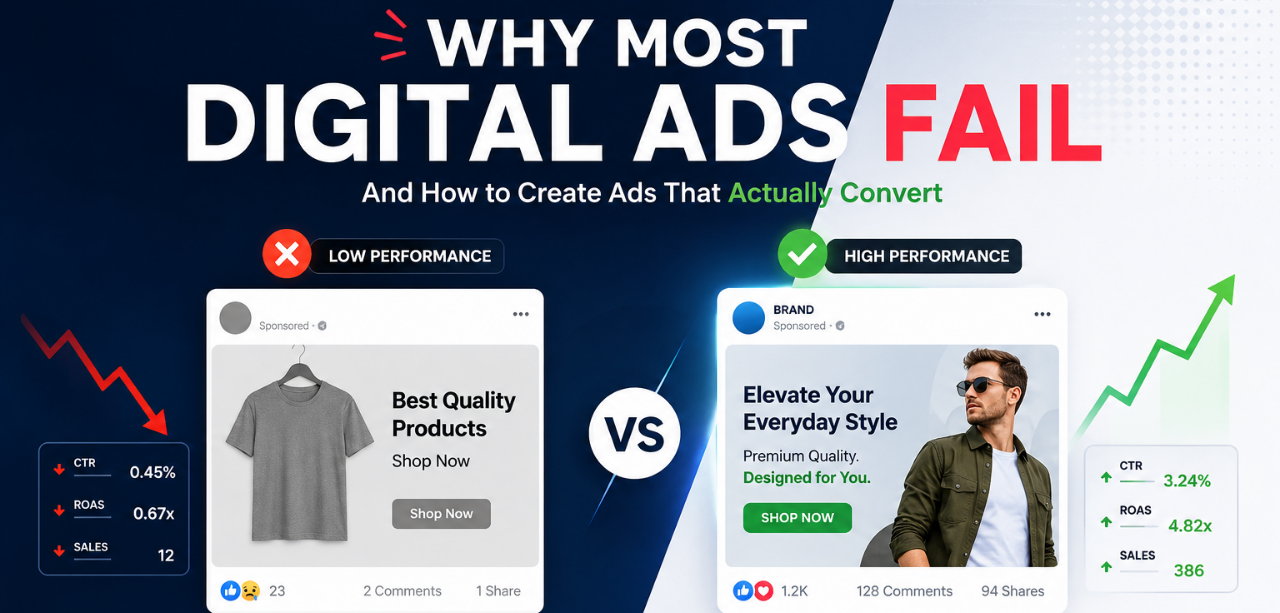
Why Most Digital Ads Fail
Many businesses pour thousands of dollars into digital advertising every month, expecting a steady stream of sales in return. Then the results come in, and they’re underwhelming — high spend, low conversions, and a growing sense that something isn’t working. The instinctive reaction is usually to blame the budget. But in most cases, the budget […]
Ready to Transform Your Advertising Strategy?
Join thousands of advertisers who trust Performoo to optimize their campaigns and maximize revenue.