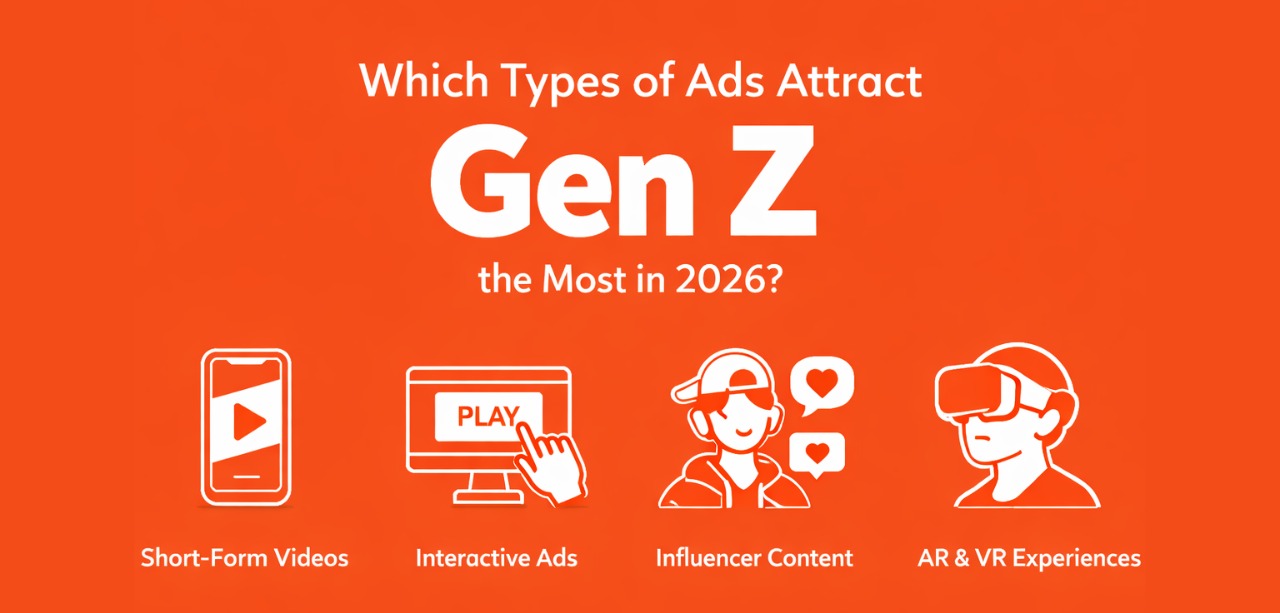
Which Types of Ads Attract Gen Z the Most in 2026?
If your brand is still relying on 30-second TV spots, banner ads, or polished corporate campaigns, you are likely invisible to the most powerful consumer generation alive today. Gen Z, broadly defined as those born between 1997 and 2012, now commands an estimated $360 billion in spending power and heavily influences household purchasing decisions beyond their own wallets.
What makes Gen Z uniquely challenging for marketers is that they grew up with the internet. They have never known a world without smartphones, social feeds, or on-demand content. As a result, they have developed an almost instinctive ability to detect and immediately ignore anything that feels like a traditional ad. Reaching them requires a fundamentally different approach.
This guide breaks down exactly which types of ads attract Gen Z the most in 2026, what is driving those preferences, and what brands can do today to build genuine connections with this audience.
Why Advertising to Gen Z Is Different in 2026
Gen Z does not consume media passively. They skip, mute, block, and scroll past content that fails to earn their attention in the first two seconds. To understand why certain ad formats work and others fail, you need to understand a few defining characteristics of this generation:
- Short attention spans, but deep engagement: Gen Z processes content fast, but will spend hours immersed in a creator they trust or a topic they care about.
- High digital literacy: They know when they are being sold to. Scripted testimonials, stock photos, and overly produced brand videos are immediately flagged as inauthentic.
- Platform-native behavior: Gen Z does not just use social media, they live in it. Content that mirrors the native look and feel of a platform performs dramatically better than content that looks imported from a traditional ad campaign.
- Peer-driven discovery: Recommendations from creators, friends, and communities carry far more weight than brand messaging. Trust is earned through people, not logos.
- Values alignment: Gen Z actively supports brands that reflect their values on sustainability, inclusivity, and social responsibility, and quickly calls out brands that appear performative.
The implication for marketers is clear: Gen Z expects brands to feel human and relatable rather than polished, corporate, and scripted.
Top Types of Ads That Attract Gen Z in 2026
1. Short-Form Video Ads
Short-form video is, without question, the single most effective ad format for Gen Z in 2026. Platforms like TikTok, Instagram Reels, and YouTube Shorts have fundamentally rewired how this generation discovers brands, products, and ideas.
81% of Gen Z prefer short-form video content when discovering new brands.
The key to effective short-form video ads is not production value; it is storytelling velocity. Brands that nail a hook in the first one to two seconds, deliver a clear emotional or entertaining payoff within 15 to 30 seconds, and leave room for the viewer to want more consistently outperform those that try to cram a traditional ad narrative into a short format.
Effective short-form video ads for Gen Z typically feature fast cuts and dynamic pacing, authentic on-camera personalities, trending audio or original sounds, and a casual visual aesthetic that mirrors organic content rather than broadcast advertising.
2. Influencer and Creator-Led Ads
Celebrity endorsements are largely wasted on Gen Z. What resonates is the micro-influencer: a creator with anywhere from 10,000 to 100,000 highly engaged followers in a specific niche. These creators have built genuine trust with their audiences, and that trust transfers to the products and brands they authentically recommend.
Nearly 70% of Gen Z consumers report being inspired to purchase a product after seeing influencer content from a creator they follow.
The distinction that matters is authenticity. Gen Z can immediately tell the difference between a creator who genuinely uses a product and one who is reading from a brand-provided script. The most effective influencer ads feel like recommendations from a knowledgeable friend rather than sponsored content. Real-life product demonstrations, honest comparisons, and personal storytelling consistently outperform polished brand-directed creative.
3. Interactive Ads
Gen Z does not want to watch ads. They want to participate in them. Interactive ad formats transform passive viewers into active participants, and the engagement difference is dramatic.
Interactive ad formats achieve up to 480% higher completion rates among Gen Z compared to passive ads.
Examples of interactive formats performing strongly with Gen Z include poll ads on Instagram Stories, swipe-vote features on TikTok, quiz-based sponsored content, gamified ads that offer rewards or challenges, and AR filters tied to brand campaigns. The underlying psychology is simple: when someone makes a choice or takes an action within an ad, they feel ownership over that interaction. That ownership translates into higher brand recall, stronger emotional connection, and significantly better conversion rates.
4. User-Generated Content (UGC) Ads
Nothing is more credible to a Gen Z consumer than seeing a real person, not an actor, not an influencer on a brand payroll, using a product in their everyday life. User-generated content (UGC) brings that authenticity to paid advertising.
Brands that repurpose customer reviews, unboxing videos, real product demonstrations, and community-created content into their paid ad strategy consistently outperform those relying solely on brand-created assets. UGC functions as social proof at scale: it signals that real people chose this product and found it worth sharing.
The rise of UGC ad agencies and creator marketplaces in 2025-2026 has made it easier than ever for brands of all sizes to source high-quality, authentic content from real customers and independent creators rather than expensive production studios.
5. Meme and Humor-Based Ads
Gen Z communicates in the language of internet culture — memes, irony, absurdist humor, and trend-aware references. Brands that master this language earn something that money cannot traditionally buy: organic shareability.
The most effective humor-based ads for Gen Z feel like they were made by someone who genuinely lives on the internet, not by a marketing committee that studied internet culture in a PowerPoint presentation. The tone is casual, self-aware, and often deliberately lo-fi. Brands like Duolingo, Wendy’s, and Ryanair have built enormous Gen Z followings by committing fully to an unfiltered, personality-driven voice.
The risk, of course, is that forced humor backfires loudly. Gen Z will not hesitate to call out a brand for trying too hard, and those moments tend to go viral for the wrong reasons.
6. Social Commerce Ads
For Gen Z, the line between entertainment and shopping has effectively disappeared. Social commerce — the ability to discover, evaluate, and purchase a product without ever leaving a social platform — is now a primary shopping behavior for this generation.
TikTok Shop, Instagram Shopping, and live selling formats on YouTube and Amazon have created frictionless purchase journeys that match exactly how Gen Z wants to shop: fast, trust-driven, and embedded in content they are already consuming. Ads that are integrated into these commerce environments, particularly live product demonstrations with real-time audience interaction, consistently drive strong conversion numbers.
Types of Ads That Do NOT Work Well for Gen Z
Understanding what to avoid is just as important as knowing what works. The following formats consistently underperform or actively damage brand perception with Gen Z audiences:
- Overly polished corporate ads: High production value signals inauthenticity. If it looks like it cost a million dollars to make, Gen Z assumes it was designed to manipulate them.
- Long-form video ads: Any unskippable pre-roll longer than 15 seconds is essentially guaranteed to generate negative brand sentiment rather than awareness.
- Aggressive sales messaging: Hard sells, countdown timers, and pressure tactics feel manipulative. Gen Z responds far better to brands that educate, entertain, or add value before asking for a purchase.
- Fake or staged testimonials: Gen Z identifies artificial enthusiasm instantly. Actors delivering scripted lines about how much they love a product generate eye-rolls, not conversions.
- Irrelevant nostalgia marketing: References to the ’80s or ’90s that were designed to resonate with older millennials land as out-of-touch when targeted at Gen Z.
The common thread across all underperforming formats is a failure to meet Gen Z where they are. These formats treat Gen Z as a passive audience to be advertised at rather than an active community to be engaged with.
Key Trends Shaping Gen Z Advertising in 2026
Several macro-trends are accelerating the shift in how brands reach Gen Z effectively:
- AI-powered personalization: Gen Z expects ads that are relevant to their specific interests and context. AI-driven creative optimization — serving different ad variations based on behavioral signals — is now table stakes for brands serious about Gen Z performance.
- Community-driven marketing: Brand communities, Discord servers, and creator-hosted spaces are becoming primary marketing channels. Gen Z trusts community recommendations above almost everything else.
- Private messaging and dark social: A growing share of Gen Z content discovery and product conversation happens in private messages, group chats, and closed communities rather than public feeds. Brands that create content worth sharing privately are gaining significant organic reach.
- Creator-led brand storytelling: The most forward-thinking brands are giving creators significant creative freedom rather than providing rigid brand guidelines. The result is content that audiences engage with because it feels genuine, not manufactured.
How Brands Can Create Ads That Gen Z Actually Engages With
Translating these insights into practice requires a shift in how brands think about advertising. Here are the most actionable steps for brands looking to reach Gen Z effectively in 2026:
- Keep videos under 60 seconds, ideally under 30. If you cannot communicate your value proposition in that window, refine the message, not the length.
- Prioritize authenticity over perfection. A slightly shaky handheld video that feels real will consistently outperform a slick production that feels staged.
- Use real people instead of scripted actors. Customers, employees, and independent creators are more credible spokespeople than anyone on a casting sheet.
- Build interactivity into your ad strategy. Polls, quizzes, and participatory formats should be part of every campaign, not an afterthought.
- Follow and participate in current platform trends. Gen Z rewards brands that move at the speed of the internet. Trend-aware content earns organic reach that paid distribution cannot replicate.
- Partner with micro-influencers in your niche. A creator with 20,000 highly engaged followers in your category will outperform a celebrity with five million disengaged ones.
- Design for mobile-first consumption. Every ad should be conceived, shot, and reviewed on a phone screen before any other format is considered.
- Move at Gen Z speed with AI creative tools. Platforms like Dilogs AI instantly turn product photos into dynamic, scroll-stopping video ads — no editing skills required. For teams producing high volumes of short-form content, these tools are becoming essential to modern marketing.
Conclusion
The ads that attract Gen Z in 2026 share a common DNA: they are authentic, interactive, entertaining, short, creator-driven, and built for mobile. They do not interrupt; they invite. They do not sell, they connect.
The brands winning Gen Z attention right now are the ones that have stopped trying to adapt their existing advertising playbook and started building something new from the ground up: content that earns trust, earns engagement, and earns the right to be part of the conversation.
For brands still relying on traditional advertising strategies to reach younger consumers, the window to adapt is narrowing. Gen Z is not waiting for brands to catch up — they are simply building their loyalty with the ones that already have.
Ready to rethink your Gen Z ad strategy? Start by auditing your current creative against the formats above — and ask yourself honestly: does this look like something Gen Z would choose to watch, or something they would scroll past?
Other top blogs
Related Articles
Continue your learning journey with these related insights
AI Sales Strategy: The Complete Guide for Modern Businesses
The modern sales landscape has shifted from a game of “who you know” to “how well you use your data.” For years, sales leaders relied on grit, high-volume cold calling, and intuition. But in 2026, the complexity of the buyer journey has outpaced human bandwidth. Traditional strategies are struggling. Buyers are more informed, and their […]
MarTech Trends 2026: The Complete Guide to Marketing Technology Evolution
The marketing technology landscape is experiencing a fundamental transformation. What began as a quest for efficiency through AI has evolved into something far more significant: a complete reimagining of how marketing teams operate, make decisions, and create customer value. For marketing leaders navigating 2026, the challenge isn’t simply adopting new tools. It’s understanding which technological […]
Ready to Transform Your Advertising Strategy?
Join thousands of advertisers who trust Performoo to optimize their campaigns and maximize revenue.